Table of Contents
- Assess Your Space and Identify Clutter Hotspots
- Create a Junk Removal Checklist and Set Goals
- How to Lift Heavy Furniture Safely
- How to Prepare for Junk Removal
- Sort Items Into Keep, Donate, Sell, and Discard Piles
- Donation Pickup Preparation and Responsible Disposal
- Work One Room at a Time and Remove Bulky Items Safely
- Conclusion
- Frequently Asked Questions
Last Updated: October 14, 2026
Assess Your Space and Identify Clutter Hotspots
Before you tackle clutter, walk through your home and note the hotspots, spare bedrooms, basements, garages, attics. Old furniture, unopened boxes, broken appliances: it all adds up.
The goal is simple: understand what you’re dealing with. Don’t judge, just observe. A clear picture helps you plan the work.
Look for these common problem areas:
- Garage corners and shelving
- Basement storage zones
- Spare bedrooms used as storage
- Closets packed with old items
- Attics filled with seasonal or forgotten goods
- Sheds or outbuildings
Create a Junk Removal Checklist and Set Goals
A good checklist keeps you focused. Write down the rooms you’ll tackle, the items in each, and what you want to accomplish. Be specific. “Clean the garage” is vague. “Remove broken tools, old paint cans, and stacked boxes” gives you a real target.
Set realistic goals. Don’t try to declutter the whole house in one weekend. Pick one or two rooms, finish them, then move on.
Here’s a simple template to get started:
|
Room or Area |
Items to Remove |
Target Date |
Status |
|---|---|---|---|
|
Garage |
Old tools, paint, boxes |
Week 1 |
Not started |
|
Basement |
Broken furniture, storage boxes |
Week 2 |
Not started |
|
Spare bedroom |
Clothes, books, misc. items |
Week 3 |
Not started |
Write down what you want to keep, too. Naming what stays helps you see what goes.
How to Lift Heavy Furniture Safely
Lifting heavy items wrong is how people hurt themselves. The good news: proper technique is simple.
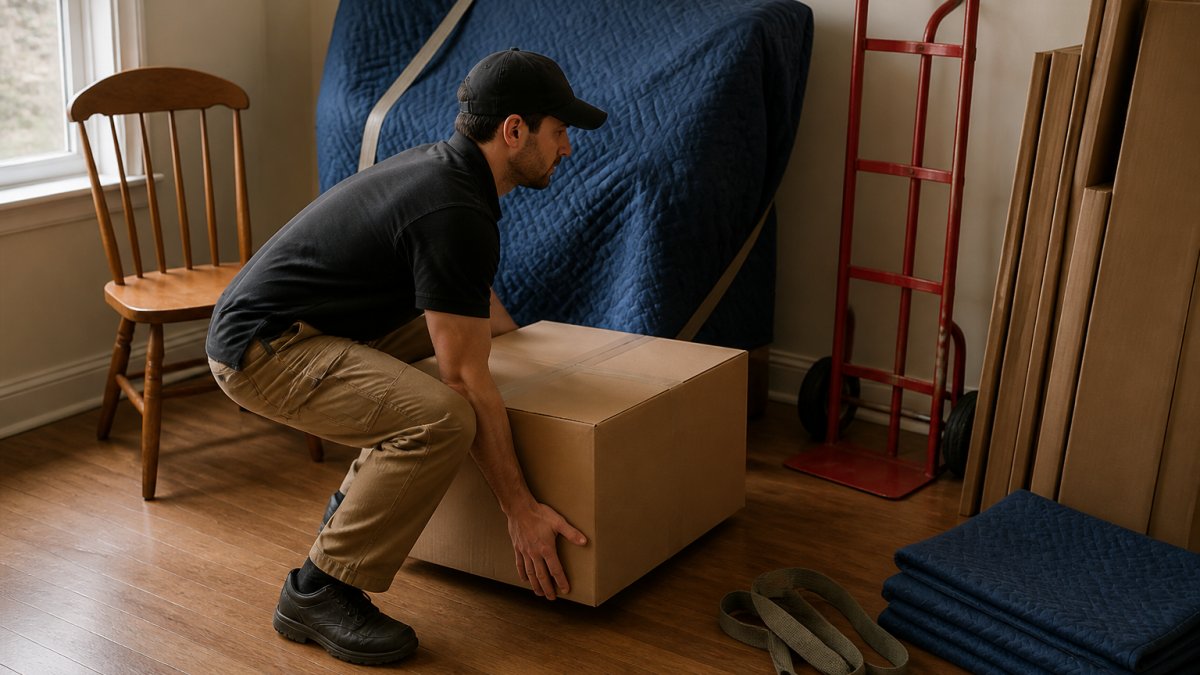
When you’re ready to lift something heavy, follow these steps:
- Stand close to the object. Feet shoulder-width apart, item between your legs.
- Bend at your knees, not your back. Squat down, let your legs work, keep your back straight. This is the most important rule.
- Get a firm grip. Use both hands and make sure it won’t slip.
- Tighten your core. Brace your stomach muscles to support your spine.
- Lift smoothly. Rise with your legs. Don’t jerk or twist. Controlled movement beats speed every time.
- Keep the load close. Hold heavy items against your body, not at arm’s length.
- Don’t twist while holding weight. If you need to turn, move your feet. Pivot your whole body, not just your torso.
If something feels too heavy or awkward, don’t push it. Two people lifting beats one person straining. And if you’d rather skip the heavy lifting, give us a call at (208) 882-5641, we handle heavy hauling all the time.
How to Prepare for Junk Removal
Preparation makes removal faster and safer. Gather what you need and organize your space.
Get these supplies ready:
- Heavy-duty gloves to protect your hands
- Work boots or sturdy shoes with good grip
- A dust mask if you’re dealing with old boxes or dusty items
- Flashlight or headlamp for dark spaces like basements or attics
- Trash bags or bins for smaller items
- Dolly or hand truck if you have one (makes moving heavy items easier)
Clear pathways so you can carry furniture and boxes without tripping.
For bulky items like old couches or dressers, think about how you’ll get them out. Will they fit through doorways? Figuring this out first prevents frustration and wall damage.
Consider getting a friend or family member to help. Heavy lifting is safer with two people.
Sort Items Into Keep, Donate, Sell, and Discard Piles
Sorting is where the real decluttering happens. Only you know what you actually use.
Create four piles:
Keep: Items you use regularly or genuinely love. If you haven’t used it in a year and have no plan to, it probably doesn’t stay.
Donate: Items in good condition you don’t need. Thrift stores, charities, and community organizations take furniture, clothes, books, and household goods.
Sell: Items with real value. Furniture in good shape, working electronics, tools, and collectibles can be sold online.
Discard: Broken items, things with missing parts, stained or damaged goods, and anything unusable. This stuff goes to the landfill.
Work one room at a time. Pick up each item and ask: Do I use this? Do I love this? Will I use it in the next year? If the answer is no to all three, it goes in donate, sell, or discard.
Don’t overthink it. Hesitation usually means you don’t need it.
Donation Pickup Preparation and Responsible Disposal
Once you’ve sorted, the piles have to actually leave the house. Here’s how to get each pile out the door.
Donations: call before you load the truck. Donation centers are picky, and it’s not personal. Call ahead and ask what they accept right now, what condition they require, and whether they pick up. Most take clean clothing, working small appliances, books, and solid furniture.
Selling: be honest about your time. Online marketplaces work for furniture in good shape, working electronics, tools, and collectibles. Photograph items in daylight, describe flaws, and set a pickup window you can keep. If something hasn’t sold in two or three weeks, move it to the donate pile.
Trash: the easy pile, with exceptions. Bagged household trash and small broken items go out with regular pickup. Bulky items are different, many haulers want them scheduled separately, and some won’t take them at all. A quick call to your hauler saves you from a couch sitting at the curb.
The pile nobody talks about: items that shouldn’t go in the trash or a donation bin. Sort these out before anything leaves your house:
- Batteries. Rechargeable batteries and button cells are the ones to watch. Tape the terminals so they can’t touch each other, keep them in a dry container, and take them to a retailer or collection site that accepts batteries.
- Paint and chemicals. Latex paint that’s fully dried can often be hardened with an absorbent (kitty litter works) and placed in regular trash where your hauler allows it. Oil-based paint, solvents, pesticides, and pool chemicals need a household hazardous waste collection event or facility. Don’t pour them down a drain, don’t put them in a burn barrel, and don’t leave them in a garage for the next owner.
- Electronics. Televisions, monitors, computers, and printers often can’t go in the trash. Retailers and electronics recyclers take them. Wipe your data first, a factory reset on phones, tablets, and computers before they leave your hands.
- Sharps and medical items. Used needles go in a rigid, puncture-resistant container with a secure lid, never loose in a trash bag. Many pharmacies take full containers back. Unused medications can often go to a take-back drop box rather than the toilet.
- Propane tanks, aerosols, and lighters. These are pressurized. Don’t put them in a compactor truck. Take them to a collection site or retailer that accepts them.
- Fluorescent bulbs and thermostats. These contain small amounts of mercury and are collected separately in most communities.
If you’re not sure about an item, set it aside in a box labeled “ask first” and make a call before disposal day.
When the pile is bigger than your curb allows. A full garage cleanout or basement purge usually means more volume than regular pickup can handle. That’s the job we do: we load it, we haul it, and we handle the heavy stuff so you’re not wrestling a freezer down the stairs.
Work One Room at a Time and Remove Bulky Items Safely
Pick one room, not the whole house, not the worst room first. One room you can finish in a few hours. Finishing beats starting.
Work through your four piles, then get the outbound stuff moving the same day. Donations and trash sitting in the hallway for a week become clutter again.
Before you move anything bulky, do a dry run. Walk the item’s path to the door with empty hands.
Reduce the item before you reduce yourself. Legs come off tables and couches. Shelves come out of bookcases. Drawers come out of dressers and get carried separately.
Use the right tool for the weight. A hand truck or dolly turns a two-person job into a one-person job for anything with a flat side.
Know when to stop and get help. Some items are past the point where technique saves you:
- Anything wider than the doorway with no removable parts
- Appliances over about 200 pounds, especially refrigerators and freezers
- Anything on a staircase with a turn in it
- Items with glass, mirrors, or a cracked frame
- Anything you can’t get a solid grip on with both hands
That’s not a failure. That’s the point where a second set of hands, or a crew, makes more sense than a trip to the doctor.
A note on the Palouse specifics. Garages and outbuildings here collect more than junk. Loess dust works into everything, so old boxes come out heavier and dustier than you expect, wear a dust mask and gloves.
After the room is clear. Sweep it, wipe down the surfaces, and stand in the doorway for a second. That empty floor is the reward.
If the bulky stuff is the part you’d rather not deal with, the couch, the freezer, the stack of boxes in the back of the garage, Me And My Truck handles appliance removal, and heavy loading.
Conclusion
To safely remove junk from your home, start with a plan. Assess what you have, set realistic goals, and work methodically. Lift properly, sort into keep, donate, sell, and discard piles, then arrange pickups and handle trash responsibly.
The hardest part is usually getting started. Once you do, momentum builds. One cleared room leads to another.
If the job feels like too much, whether it’s heavy furniture, a full basement cleanout, or just the sheer volume of stuff, you don’t have to do it alone.
Frequently Asked Questions
What’s the safest way to safely remove junk from home without getting hurt?
Start by assessing what you have and breaking the job into smaller sections—one room at a time. Bend at your knees when lifting, keep your back straight, and ask for help with anything heavy or awkward. Wear sturdy shoes and gloves, clear your path of obstacles, and take breaks. If something feels unsafe to move, leave it—that’s what Me And My Truck is for. Call or text (208) 882-5641.
How do I create a junk removal checklist that actually works?
List each room or area you want to tackle, then break it down by category: furniture, appliances, boxes, yard debris. For each category, note what needs to go and where it’s going (donation, resale, discard). Check items off as you sort and remove them. This keeps you focused and prevents items from piling up in another room. Stick to one section at a time so you don’t feel overwhelmed.
How should I prepare for junk removal before the crew arrives?
Clear a path to the items you want removed so the crew can access them easily. Group similar items together—all furniture in one area, all boxes in another. Remove any fragile items or things you want to keep from the pile. If items are in a garage or basement, make sure the door or stairway is unobstructed. Let the crew know about any heavy or difficult-to-reach pieces ahead of time so they can plan accordingly.
What should I do to prepare items for donation pickup?
Group donation items together in one spot, ideally near your entryway or driveway for easy access. Make sure items are clean and in working condition—donation centers won’t accept broken appliances or damaged furniture. Have your donation receipts ready if you need them for tax purposes. Let the pickup service know the quantity and type of items so they can bring the right truck and crew. Clear a path so they can load items without moving other belongings around.
Call or text (208) 882-5641 or send a photo for a free quote.