Last Updated: October 23, 2026
Quick Summary
Keep pets off the roof and away from treated areas during roof moss treatment and until everything is fully dry. Most products use copper or zinc that can make animals sick if licked or ingested, so follow the label and watch the drip line.
- Granular powder is the easiest form for a pet to lick up, so sweep loose granules after treatment.
- Empty and refill outdoor water bowls, birdbaths, and kiddie pools after treatment and rain.
- Wait until treated surfaces are fully dry, then add a buffer before letting pets back out.
- Check the drip line, splash block, and driveway under the eaves, not just the roof.
- If you suspect exposure, rinse paws and call your vet with the product label in hand.
Table of Contents
- Roof Moss Treatment and Pets: The Short Answer
- What’s Actually in Roof Moss Treatment?
- Roof Moss Treatment Application: Keeping Pets Out of the Way
- Roof Moss Treatment Drying Time and When Pets Can Return
- How Long to Keep Pets Away After Moss Treatment
- Rain, Runoff, and Exposure Timelines
- What to Do After Suspected Exposure
- A Practical Pet-Safety Checklist
- Frequently Asked Questions
Roof Moss Treatment and Pets: The Short Answer
No, pets should not be on the roof or near treated areas while work is happening. Roof moss treatment applies a product that kills moss on shingles, and the honest answer on pet safety is simple: keep them away during application and until everything is fully dry.
We’re Me And My Truck, and we’ve treated moss on Palouse roofs since 1987.
Most guides say either “it’s totally fine” or “it’s deadly poison.” Neither helps. The truth depends on the product, which for Me And My Truck is a zinc-based product only that is not harmful to pets, while some other moss treatment products can be harmful to pets, as well as the weather and how well you keep your pet out of the way.
Below: what’s in these products, how long pets should stay off treated areas, and what to do if your pet gets into something it shouldn’t.
What’s Actually in Roof Moss Treatment?
Most roof moss products fall into two families: metal-based powders and liquid sprays. The metal is usually copper or zinc, and that’s the part that matters for pet safety. These metals kill moss, and in large amounts they can make animals sick.
A dog that licks powder off the ground gets a concentrated dose. A cat that walks through wet spray and grooms its paws gets the same thing in smaller amounts.
Granular Powder vs. Liquid Treatment
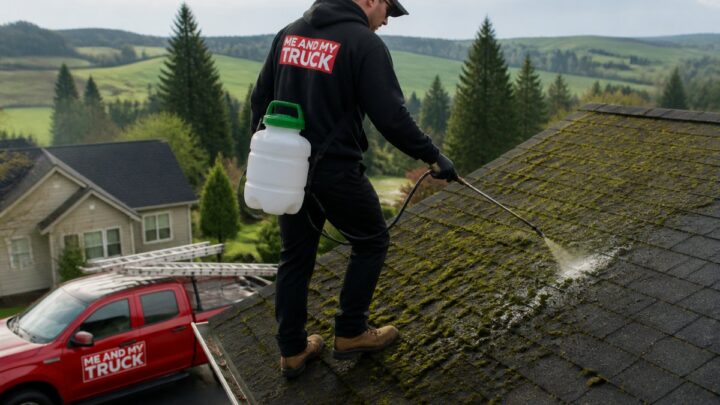
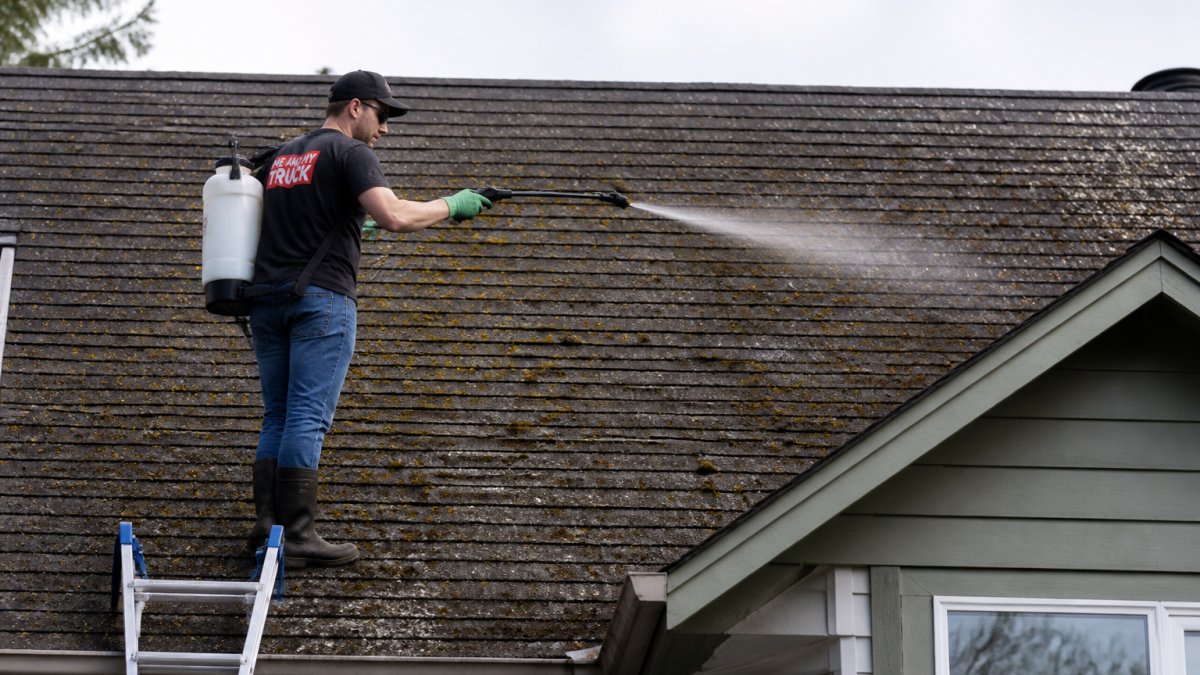
Granular powder is spread along the roof ridge or on mossy patches and activates when it rains. Liquid treatment is mixed and sprayed directly onto the moss with a pump sprayer.
For pet owners, the practical difference is where the product ends up:
- Granular powder sits on the roof until rain moves it. It collects in gutters and drip lines, and loose granules are the easiest form for a pet to lick up.
- Liquid treatment soaks in faster. Less sits loose, but overspray and drip lines still carry residue to the ground.
Neither is something you want a pet nosing around in. Both need time to dry and settle.
Ingredient-by-Ingredient Pet Toxicity Guidance
Here’s a plain rundown. This is general guidance, not veterinary advice, and the product label always wins.
- Copper sulfate: Common in moss killers. The main risk is ingestion, licking loose granules or grooming paws that walked through wet spray. People commonly report drooling, vomiting, and stomach upset. Skin contact alone is usually less of a concern than licking it off.
- Zinc chloride and zinc sulfate: Also used to kill moss. Ingestion can irritate the digestive tract. The sneaky route is runoff into a water bowl, birdbath, or low spot a dog drinks from, so empty and refill outdoor water sources after treatment and rain.
- Iron-based products: Generally less harsh on the stomach, but they can stain paws and light-colored fur and cause mild stomach upset if a pet licks a concentrated patch. Staining is the more common complaint.
One more thing: never transfer a moss product into an unmarked container. A scoop of blue powder in a coffee can looks like a lot of things to a curious pet, and to a kid.
How the Route of Exposure Changes the Risk
Not every exposure is the same:
- Skin and paw contact: Usually the mildest route. Rinse with plain water and keep the pet from grooming until paws are clean.
- Paw licking and grooming: A step up, because the pet is now ingesting whatever was on its fur. This is the most common route for cats.
- Ingestion of granules or concentrate: The most serious route. A mouthful of powder or a lap from a puddle is a real dose, not a trace.
A puppy gets a bigger dose relative to body weight from the same lick, and cats groom more thoroughly. Rabbits, guinea pigs, and birds are more sensitive to fumes and dust, so keep them well inside.
When in doubt, read the label’s pet language first, then call your vet with the product name in hand. That’s the combination that actually protects the animal.
Roof Moss Treatment Application: Keeping Pets Out of the Way
The safest approach is simple: pets go inside before the sprayer or spreader comes out and stay inside until you’ve cleaned up and everything has dried. Plan the day around your pet.
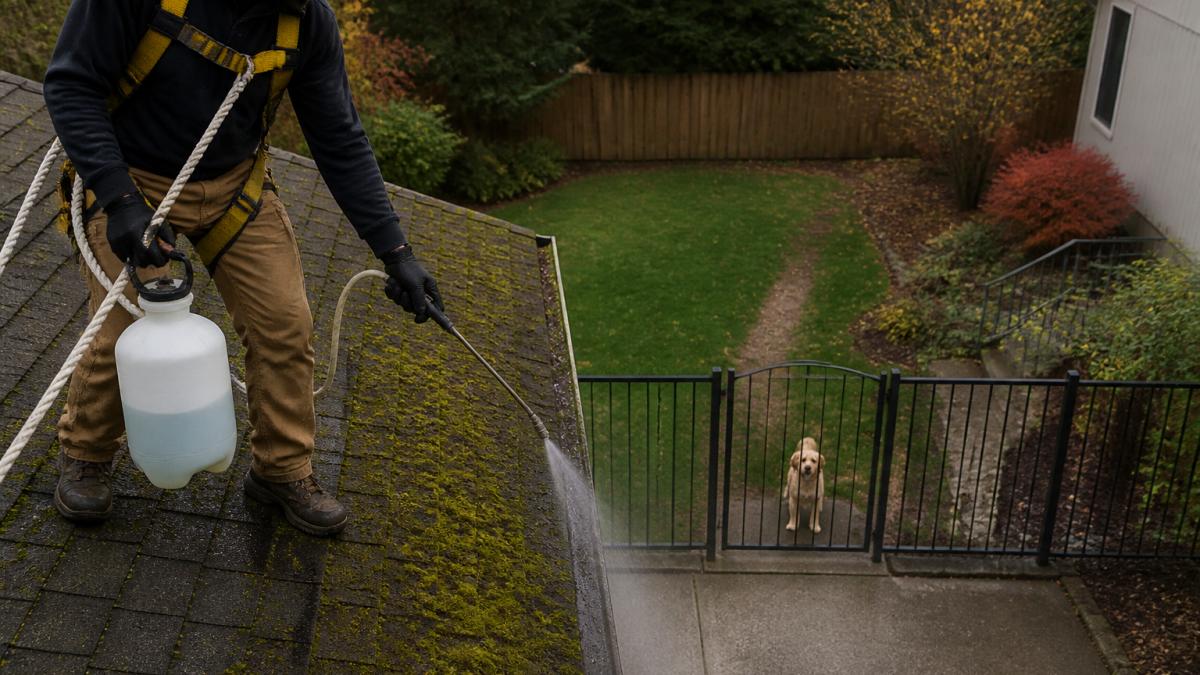
If you’re doing the work yourself, here’s the order we’d follow:
- Move pets, water bowls, and food dishes indoors.
- Close windows on the treated side so drift doesn’t come in.
- Cover or move anything a pet uses outside, like a bed or a tied-out line.
- Apply the product according to the label.
- Clean tools and rinse the area where you mixed.
- Keep pets in until surfaces are dry and any loose granules are swept up.
If you’d rather not be on the roof at all, that’s a fair call. Me And My Truck handles roof moss treatment by pump sprayer or granular application, and we’ll talk through the pet timeline before we start.
Roof Moss Treatment Drying Time and When Pets Can Return
Drying time depends on the product, the weather, and how much shade the roof gets. On a warm, breezy Palouse afternoon, a liquid treatment can be dry to the touch in a few hours. In cool, damp weather, plan on longer. The rule we give people: wait until treated surfaces are fully dry, then add a buffer.
A few things slow drying down:
- Morning fog that hangs in the canyons
- Cool north-facing roof planes
- Heavy moss that soaks up the spray
Why Dry Doesn’t Always Mean Done
A dry roof is not the same as a clean ground. The product doesn’t vanish when the shingles dry. It sits as residue on the roof, in the gutters, and on the surfaces below until rain moves it. So two clocks are running: the roof clock (dry to the touch) and the ground clock (runoff, drip lines, and splash zones dry and free of loose residue).
Rain, Runoff, and the Residue That Stays
Rain is the wild card. It activates granular products, which is how they work, but it also moves residue off the roof and into gutters, downspouts, and the ground below.
A few patterns worth knowing:
- Light rain after granules: May not fully wash product in. Loose granules can sit in gutters and at the drip line longer than expected.
- Heavy rain after liquid treatment: Pushes residue to the ground fast. The roof may be clean while the splash zone is loaded.
- Dry spell after treatment: Residue stays on the roof and in gutters. Ground risk is lower, but roof and gutter risk lingers.
Check the forecast before treatment, keep pets inside and away from downspout outlets during rain, and let surfaces dry before letting pets out after. If your downspout dumps into a low spot your dog drinks from, block it off for a few days.
A Simple Return Checklist
When you think it’s time to let pets back out, run this short check:
- Treated roof surface is dry to the touch
- Gutters and downspouts are not holding loose granules
- Drip line, splash block, and driveway under the eaves are dry
If any box is unchecked, give it another day.
If you’d rather not be the one up there judging all this, Me And My Truck handles roof moss treatment by pump sprayer or granular application, and we’ll walk through the pet timeline with you before we start. Call or text (208) 882-5641.
How Long to Keep Pets Away After Moss Treatment
Keep pets off treated areas for at least the full drying period, and longer if the label says so. For most products, that means during application and until everything is dry, then watching the runoff zones for another day. If your pet is a licker or a puppy that puts everything in its mouth, lean longer.
Here’s a rough guide to how long to keep pets away after moss treatment:
|
Situation |
Keep pets away |
Why |
|---|---|---|
|
During application |
Entire time |
Direct contact with wet product |
|
After spraying, dry weather |
Until fully dry, plus a buffer |
Residue on surfaces and drip line |
|
After spreading granules |
Until granules are swept or washed in |
Loose powder is easy to lick up |
|
Rain in the forecast |
Until after the rain and a dry day |
Runoff carries product to the ground |
|
Puppies, lickers, or cats that groom |
Add extra time |
Higher chance of ingestion |
When in doubt, add a day. No pet ever got hurt by waiting an extra afternoon.
Rain, Runoff, and Exposure Timelines
Rain is the wild card.
That runoff is where most pet exposure actually happens. Not on the roof. On the driveway, the splash block, the flower bed, and the water bowl someone left outside.
So watch the weather:
- Before treatment: check the forecast. Rain right after application pushes product where you don’t want it.
- During rain: keep pets inside and away from downspout outlets.
- After rain: let surfaces dry, then check the drip line before letting pets out.
Also think about where the water goes. If your downspout dumps into a low spot your dog drinks from, that’s the spot to block off for a few days.
What to Do After Suspected Exposure
If you think your pet got into moss treatment, don’t wait to see what happens. Call your veterinarian or a pet poison helpline right away. Bring the product label or a photo of it. Signs to watch for include drooling, vomiting, diarrhea, pawing at the mouth, and general sluggishness.
What to do, in order:
- Move the pet away from the area and into a clean space.
- Rinse paws and any product off the coat with plain water.
- Offer fresh water to drink.
- Call your vet or a poison helpline and follow their instructions.
- Note the product name and when the exposure likely happened.
Don’t induce vomiting unless a vet tells you to. That’s a common mistake, and it can make things worse.
A Practical Pet-Safety Checklist
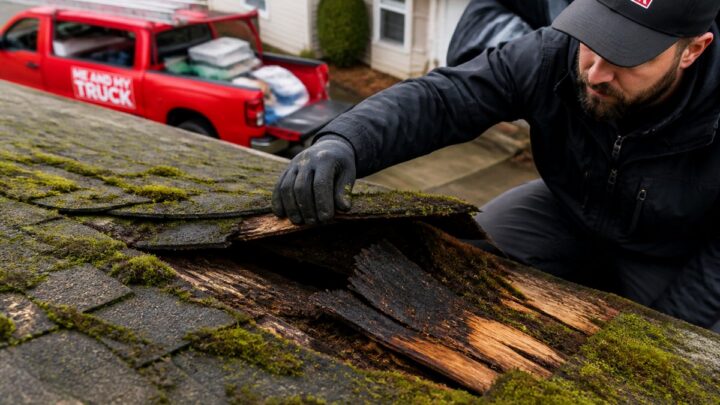
One more note on the roof itself: roof moss treatment kills moss, but it doesn’t remove it. Dead moss dries out, breaks down, and washes away over the following weeks. Brown patches up there for a while mean the product is working, not failing.
If you’d rather hand the whole job to someone who’s been on Palouse roofs for decades, Me And My Truck can help. And if the treatment leaves your gutters full of dead moss and granules, our gutter cleaning service hauls all that debris away, worth doing once or twice a year, especially after a treatment.
Frequently Asked Questions
Is there a safe roof moss killer for pets?
No treatment is proven safe for pets, so the honest answer is to be careful rather than assume. Read the product label and follow its directions for animals and children. Keep pets off the roof area and away from the ground below during application, and keep them off treated surfaces until everything is fully dry. If you would rather not manage that yourself, Me And My Truck handles roof moss treatment and can talk through the timing at (208) 882-5641.
How long should pets stay away after roof moss treatment?
Keep pets away during application and until the treated surfaces are fully dry. Drying time depends on the product, the weather, and how much was applied, so check the label and use your own eyes: if the roof or ground below is still wet, keep pets inside or on a leash away from that area. After it dries, watch for residue and runoff, and keep pets from licking or chewing anything that fell from the roof.
Can pets be outside while roof moss treatment is being applied?
It is better to bring pets inside or keep them well away from the house while treatment is going on. Spray drift, powder, and drips can land on grass, sidewalks, and pet toys below the roof. Put pets in a room away from the work area, close dog doors, and ask anyone helping you to keep the yard clear until application is finished and surfaces are dry.
Does roof moss treatment disappear right away?
No. Treatment kills the moss, but the dead moss dries, breaks down, and washes away gradually over weeks. That means residue and dead moss can linger on the roof and in gutters after the application, so keep pets from eating or rolling in anything that falls to the ground. Plan for a follow-up look at the roof and gutters rather than expecting a clean roof the same day.
What should I do before treating roof moss if I have pets?
Pick up pet bowls, toys, and water dishes from the yard, close pet doors, and move pets to a room away from the work area. Check the product label for animal precautions and note the drying time. Tell anyone applying the treatment where pets will be. After application, keep pets off the ground below the roof until surfaces are dry, and watch for runoff after the first rain.
Roof moss doesn’t wait, and neither does a curious dog. If you’d rather skip the ladder and the worry, we’re happy to handle the treatment for you. Call or text (208) 882-5641 or send a photo for a free quote.