Last Updated: October 29, 2026
Quick Summary
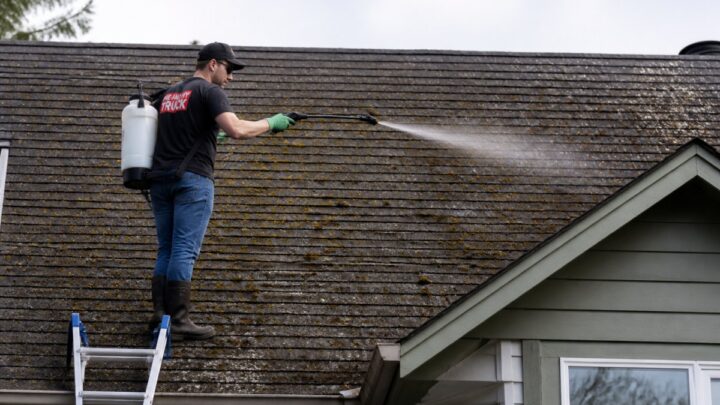
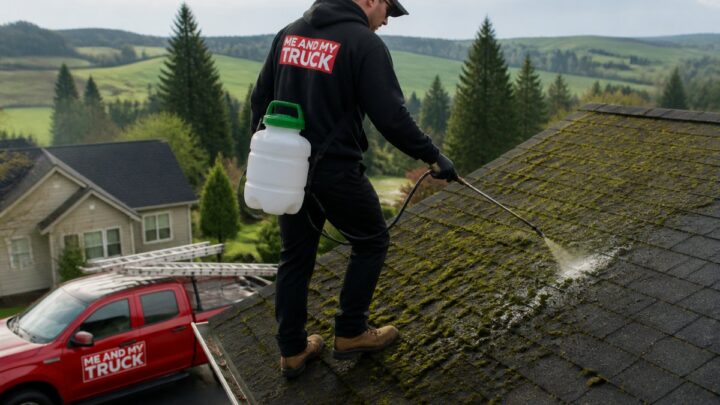
Roof moss treatment means applying a liquid spray or granular product that kills the moss, which then turns brown and washes away over several weeks. Never pressure wash a roof, since that blasts away granules and drives water under the tabs. Treat on a dry, calm day and let rain do the removal.
- Moss grows where shade and moisture linger, so treatment kills it but shade brings it back.
- Black streaks are usually algae, not moss; moss is green, fuzzy, and raised.
- Sweep loose debris gently with a soft broom, since scraping lifts shingle granules.
- Don’t rinse the product off; moss turns brown over the next week or two.
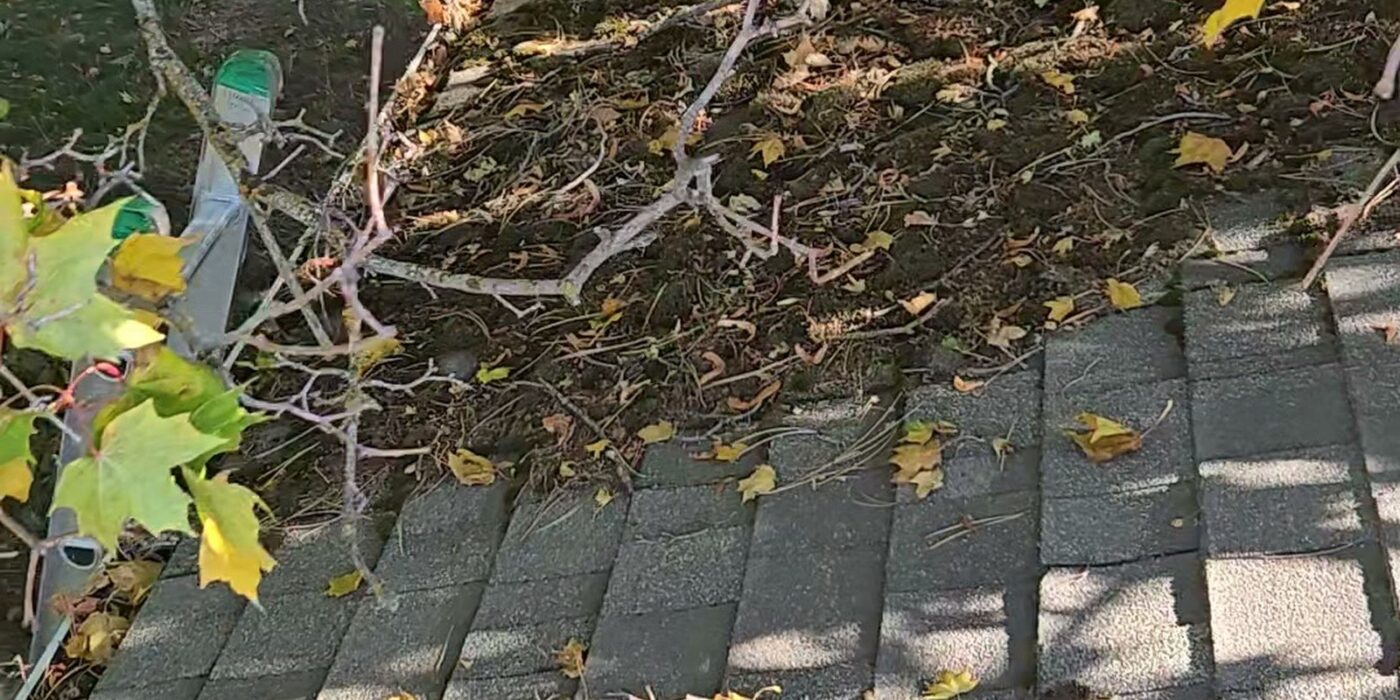
- Clean gutters once or twice a year, by hand, after dead moss washes down.
Table of Contents
- Why Palouse Roofs Grow Moss
- Signs of Roof Moss Water Damage to Watch For
- Roof Moss Treatment vs Removal: What’s the Difference?
- Step-by-Step: How to Treat Roof Moss Yourself
- Gutter Cleaning Frequency After Moss Treatment
- What to Expect After Treatment and How to Prevent Regrowth
- Let Me And My Truck Handle Your Roof Moss Treatment
- Frequently Asked Questions
Why Palouse Roofs Grow Moss
Moss on a Palouse roof is not a cosmetic problem. It holds water against your shingles, and that trapped moisture can shorten a roof’s life. At Me And My Truck, we’ve been working on Moscow and Pullman homes since 1987.
Your roof grows moss because it stays wet and stays shaded. That’s it. Shaded spots like a north slope, the side under a cottonwood, or a valley between two gables tend to stay damp longer.
Shade, Moisture, and Palouse Weather
Palouse weather gives moss exactly what it wants. Canyon fog rolls in and sits. Fall rains soak the shingles. Then freeze-thaw cycles work moisture into every seam. Add loess dust blowing up from bare ground, and you’ve got a thin film of dirt that moss roots right into.
A roof moss treatment plan starts with understanding that moss is a symptom. The cause is shade and lingering moisture. Treatment kills the moss, but if the shade and moisture stay, moss can come back. That’s why aftercare matters.
Signs of Roof Moss Water Damage to Watch For
Moss is usually a surface issue, but it can cause real wear over time, and there are signs worth watching.
Watch for these:
- Shingle granules collecting in gutters or at the downspout base
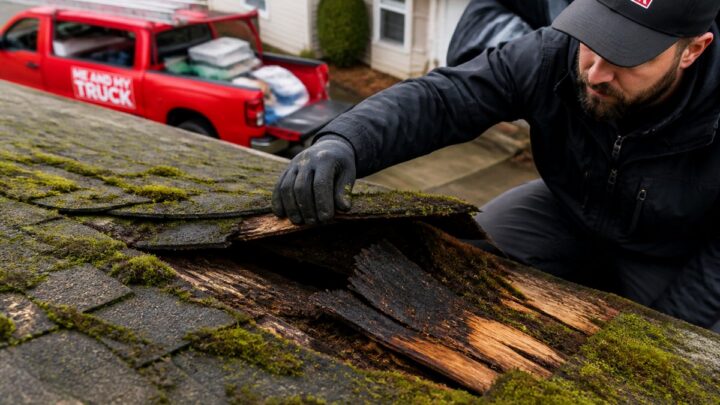
- Curling, lifting, or missing shingle tabs near moss patches
- Dark, damp spots on roof decking seen from the attic
- Moss growing in valleys and along flashing
- Water stains on ceilings below the mossy slope
Moss holds moisture against the shingle surface, which can speed up granule loss and let water creep under tabs. Catching it early helps you avoid bigger problems.
One thing to know: black streaks are usually algae, not moss. Algae stains are flatter and darker. Moss is green, fuzzy, and raised.
Roof Moss Treatment vs Removal: What’s the Difference?
Roof moss treatment is the process of applying a product that kills the moss so it dies, breaks down, and washes away over the following weeks. Removal is what happens after: the dead moss lets go and rain carries it off. In practice, treatment comes first and removal follows naturally.
People often expect instant bare shingles. That’s not how it works. The moss dies, turns brown, and gradually releases from the roof over several weeks.
Why Pressure Washing Is the Wrong Tool
Pressure washing a roof can blast away granules and drive water under tabs. We never pressure wash roofs or siding, and we’d advise against it.
The right tools are simple:
- A pump sprayer for liquid treatment
- A powder or granular product for stubborn patches
- A soft broom for loose debris
Step-by-Step: How to Treat Roof Moss Yourself
Here’s the full method, start to finish. Treat it as a weekend job on a dry, calm day.
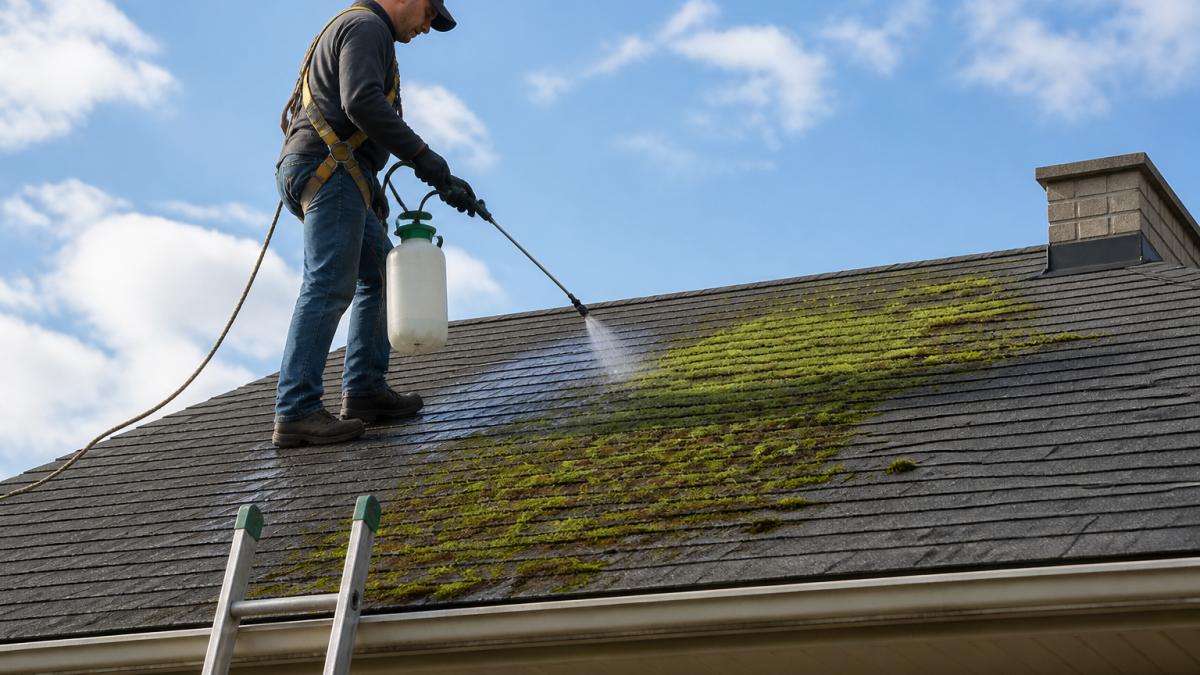
What you’ll need:
- Pump sprayer or granular moss product
- Soft broom
- Garden hose
- Soft-soled shoes
- Fall protection if you’re going up
- Safety glasses and gloves
- Plastic sheeting or a tarp for plants below
Step 1: Pick your day. Dry, calm, no rain in the forecast for a day or two. Wet shingles are slick shingles.
Step 2: Protect what’s below. Cover shrubs, garden beds, and anything you don’t want hit with runoff. Move patio furniture and pet bowls.
Step 3: Clear loose debris. Gently sweep off leaves and loose moss with a soft broom. Don’t scrape hard. On asphalt shingles, scraping lifts granules.
Step 4: Apply the treatment. Spray the moss patches evenly with your pump sprayer, or spread granular product along the mossy areas.
Step 5: Let it work. Don’t rinse it off. The product needs time to kill the moss. It will turn brown over the next week or two.
Step 6: Let weather do the removal. Rain washes the dead moss away over the following weeks.
Roof-Type Notes Before You Start
A one-size-fits-all approach is how people damage roofs. Here’s how the method shifts by material:
- Asphalt shingles: The most common roof here, and the most forgiving if you’re gentle. Never scrape or pressure wash. Granules are the shingle’s armor, and once they’re gone they don’t come back. Keep the spray light and let the product do the work.
- Metal roofs: Slick when wet, so timing matters. Treat on a dry day and stay off the panels if there’s any dew or frost. Some finishes don’t like harsh products, so check the label against your panel finish before you spray. Walk slowly and use soft soles.
- Wood shakes and shingles: These hold moisture longer and moss roots deeper. Treat, then let the dead moss weather off. Don’t scrub.
- Tile roofs: Heavy and brittle. Walking on tile is a different skill than walking on shingles, and a cracked tile is a repair job.
Safety Checklist and When to Stop
Roof safety is simple but serious. Run through this before you climb:
- Roof is dry and the forecast is clear
- Soft-soled shoes with good grip
- Fall protection in place if you’re going up
- Ladder is stable and on level ground
- A second person on the ground
- Safety glasses and gloves on
- You feel steady and comfortable
Stop and come down if any of these happen: the roof is wet or frosty, the pitch feels too steep, the wind picks up, or you just feel uneasy. There’s no shame in climbing down. If you have pets, they should stay off the treated areas until the product dries. Our article on whether roof moss treatment is safe for pets covers the details.
Here’s the whole job at a glance, from picking your day to letting the weather finish the work.
|
Step |
What to do |
Timing or note |
|---|---|---|
|
1. Pick your day |
Dry, calm, no rain in the forecast |
Wet shingles are slick shingles |
|
2. Protect what’s below |
Cover shrubs, garden beds, patio furniture, pet bowls |
Block or redirect downspout runoff |
|
3. Clear loose debris |
Gently sweep leaves and loose moss with a soft broom |
Don’t scrape hard; scraping lifts granules |
|
4. Apply the treatment |
Spray moss patches evenly or spread granular product |
Work top down, keep spray on the moss |
|
5. Let it work |
Don’t rinse it off |
Moss turns brown over the next week or two |
|
6. Let weather do the removal |
Rain washes dead moss away |
Sweep walkways and gutters as it comes down |
Gutter Cleaning Frequency After Moss Treatment
Dead moss has to go somewhere, and that somewhere is your gutters. After treatment, expect extra debris for a few weeks. Clean the gutters once the moss has washed down, then settle into a normal routine.
Once or twice a year is right for almost every Palouse home. Late fall after cottonwood season, and again in spring after the freeze-thaw loosens everything. That’s it. More than twice a year usually means something else is going on.
We clean gutters by hand and haul all the debris away. If you’d rather not climb a ladder, Me And My Truck handles gutter cleaning in Moscow and Pullman.
What to Expect After Treatment and How to Prevent Regrowth
Expect brown moss within a week or two, and a cleaner roof over the following weeks as rain does its work. It’s gradual, not instant. The moss is dead; it just hasn’t let go yet.
Roughly: week one to two, moss turns brown and starts to loosen. Over the following weeks, rain and wind carry much of it off, and you may see extra debris in gutters and at downspout bases. On a shaded north slope in a wet fall, it can take longer. On a sunny south slope, it often goes faster.
Prevention Options and Their Trade-Offs
Prevention is where most people give up too early. Moss comes back where shade and moisture stay. No option is permanent, and each has a catch:
- Trim back branches: Letting more sun and airflow reach the roof helps it dry. The trade-off is that it’s tree work, not roof work, and it may need a tree company. We don’t do tree removal, so call someone who does.
- Keep gutters clear: Water that backs up at the eave keeps the edge wet. Clean gutters once or twice a year, by hand, with debris hauled away. That’s the right rhythm for almost every home here. More than twice a year usually means something else is going on.
- Re-treat mossy spots before they spread: A light spot treatment on the shaded areas every year or two can keep moss from covering the slope. Watch the north side and the valleys after cottonwood season.
- Address leaks and damaged flashing with a repair company: We point out problems so you can call a repair company. We don’t do roof repairs. Catching a lifted flashing early is far better than finding a ceiling stain later.
Plan on re-treating shaded areas every year or two. A roof that gets sun and airflow will generally stay cleaner longer.
If you’d rather not climb up and deal with it, Me And My Truck can handle the treatment and clean out the gutters once the dead moss comes down. Call or text (208) 882-5641 or send a photo for a free quote.
Let Me And My Truck Handle Your Roof Moss Treatment
Some folks are happy to climb up and spray it themselves. Others would rather not, and that’s fine. Roof moss treatment is one of the services we offer around the Palouse.
We spray the moss, let it do its work, and clean out the gutters once the dead moss comes down. We point out any roof or gutter problems we spot so you can call a repair company.
If you’d rather we handle it, give us a call at (208) 882-5641 and we’ll take a look.
Frequently Asked Questions
What is the best way to treat roof moss?
The safest approach is a pump sprayer or a powder/granular product applied to the moss, not a pressure washer. Pressure washing tears up shingle granules and forces water under the shingles. Apply your treatment on a dry day, let it sit, and give the moss weeks to die and break down before it washes away. Me And My Truck handles roof moss treatment across Moscow and Pullman if you would rather not climb up there.
Does moss damage a roof over time?
Yes. Moss holds moisture against the shingles, and in a Palouse freeze-thaw winter that trapped water expands and works its way under edges. Over time you can get lifted shingles, rot, and leaks. Watch for the signs of roof moss water damage: dark streaks, curling shingle edges, granules in the gutters, and damp spots on the ceiling. Catching it early keeps a small treatment from turning into a repair bill.
How long does it take for moss to die after treatment?
Expect weeks, not hours. The treatment kills the moss, then the dead moss dries, breaks down, and washes away with rain over the following weeks. You will see it turn brown and loosen first. Don’t expect a clean roof the next morning. After it clears, keep up routine maintenance like gutter cleaning once or twice a year so debris doesn’t pile up and hold moisture again.
Can I pressure wash my roof to get rid of moss?
No. Pressure washing strips the protective granules off asphalt shingles and can force water where it shouldn’t go, which shortens roof lifespan. Roof moss treatment is a spray or granular job, never a pressure wash. Save the pressure washer for concrete and hard surfaces. If you want the moss handled safely, give us a call at (208) 882-5641.
Moss doesn’t fix itself, and every Palouse fall gives it another chance to spread. If you’d rather skip the ladder, Me And My Truck is happy to handle the treatment and the cleanup for you.
Call or text (208) 882-5641 or send a photo for a free quote.