Last Updated: November 2, 2026
Quick Summary
To keep clean windows dusty areas stay clean longer by cleaning on a schedule that matches the dust, using lint-free microfiber, and wiping away dry dust before washing. Cutting dust at the source outside helps too, since bare soil, gravel, and harvest dust are the main culprits on the Palouse.
- Check windows every few weeks in summer and fall, when dust is heaviest.
- Use a dry microfiber cloth to wipe dust off before washing to avoid streaks.
- Use one damp microfiber cloth for washing and a separate dry one for buffing.
- Cover bare soil, settle gravel, and keep windward windows shut on blowy harvest days.
- Brush off screen debris and rinse gently, letting screens dry fully before reinstalling.
Table of Contents
- Why Dust Gets Into Your Windows So Fast on the Palouse
- 1. Set a Cleaning Schedule That Matches How Dusty It Gets
- 2. Use the Right Cloth for Cleaning Windows
- 3. Wipe Dust Off Before You Wash to Avoid Smearing
- 4. Clean Window Screens Regularly and Gently
- 5. Keep Dust Out of Window Tracks and Frames
- 6. Control Dust Sources Around the Outside of Your Windows
- 7. Time Your Window Opening and Closing Around Dust Days
- Frequently Asked Questions
Why Dust Gets Into Your Windows So Fast on the Palouse
Keeping windows clean in dusty areas is a losing battle if you don’t know where the clean windows dusty problem starts, and it usually starts with the dust itself. On the Palouse, it comes from everywhere: loess soil blowing off the fields, harvest dust, and cottonwood fuzz every spring. Dust on the Palouse can turn a clean pane gray faster than you’d expect.
The fine loess dust settles on glass, sills, and screens. Cottonwood season adds sticky fluff that clings to the window screens. Once you know what you’re fighting, the seven steps below make a lot more sense.
- Loess dust is fine and settles into every crack
- Cottonwood fuzz catches on screens and window frames
- Harvest dust blows in on dry, windy days
1. Set a Cleaning Schedule That Matches How Dusty It Gets
Check your windows every few weeks in summer and fall, when dust is heaviest.
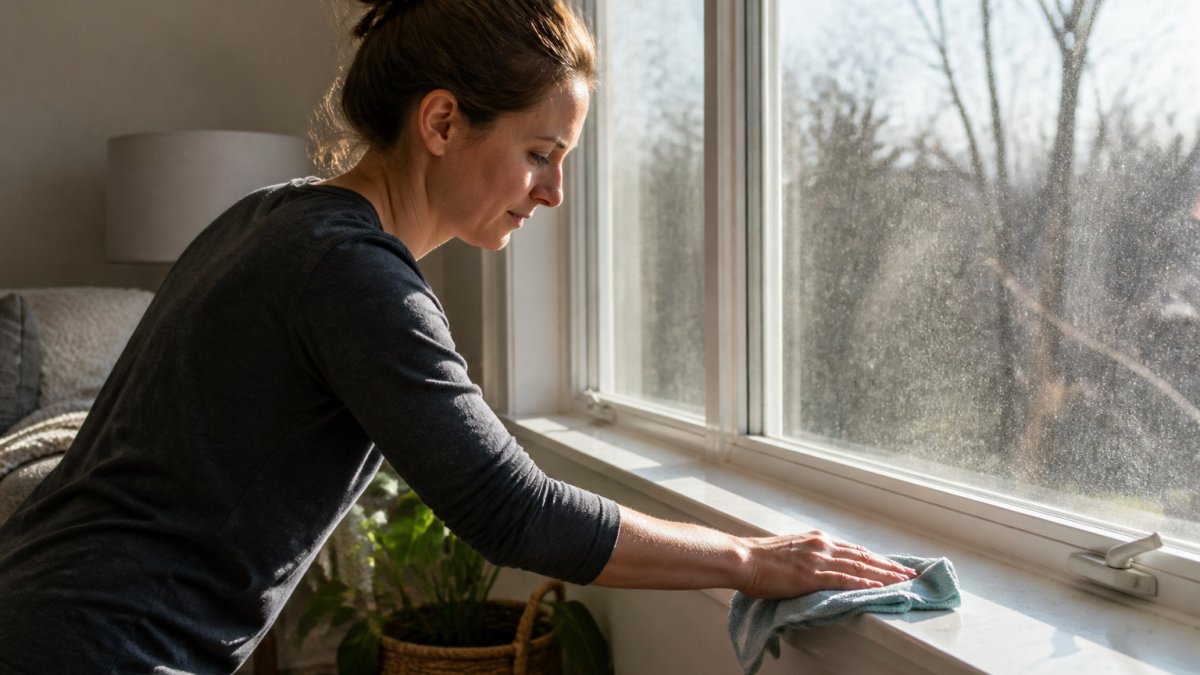
A simple rhythm to start with:
- Quick dust-off of sills every two weeks during harvest
- Full cleaning of glass and screens two to four times a year
- An extra cleaning after cottonwood season ends
If you can see dust on the glass from the inside, it’s time to clean. Don’t wait for the view to disappear.
Here’s a simple rhythm to start with, based on how heavy the dust gets.
|
Task |
How often |
When |
|---|---|---|
|
Quick dust-off of sills |
Every two weeks |
During harvest |
|
Full cleaning of glass and screens |
Two to four times a year |
Year-round |
|
Extra cleaning |
Once |
After cottonwood season ends |
2. Use the Right Cloth for Cleaning Windows
The cloth you use matters as much as the cleaner, and on the Palouse it matters more than usual. Loess dust is fine and slightly gritty. Drag it around with the wrong cloth and you can leave a haze or, worse, fine scratches in the glass.
Here’s what actually works:
- Microfiber, lint-free, and clean. A fresh microfiber cloth lifts dust and grime without leaving streaks. Use one cloth for washing and a separate dry one for buffing.
- Skip paper towels for the final pass. They smear and shed lint, especially on dry, windy days when the glass is already staticky with dust.
- Retire old rags. Terrycloth and worn towels leave fuzz and can trap grit that drags across the pane.
- A squeegee helps on big panes. A clean rubber blade pulls water off in one pass and cuts streaks. Wipe the blade dry between passes so it doesn’t drip dirty water back onto clean glass.
A simple two-cloth setup covers most homes: one damp microfiber for washing, one dry microfiber for buffing. Wash them separately from fabric softener, which leaves a film that actually attracts dust.
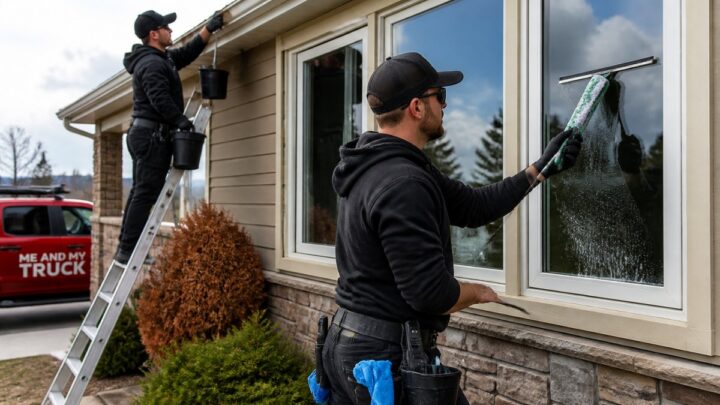
If you’d rather not spend a Saturday on ladders, Me And My Truck handles inside and outside glass, screens, and a quick wipe-down of tracks. Call or text (208) 882-5641.
3. Wipe Dust Off Before You Wash to Avoid Smearing
This is the step most people skip, and it causes the most streaks. Dry dust mixed with wet cleaner turns into a gritty paste that drags across the glass.
Wipe down the glass, frames, and sills with a dry microfiber cloth first. Then wash with a gentle solution of water and a small amount of mild detergent or a splash of vinegar. A gentle vinegar-and-water mix works for most glass.
Watch out: scrubbing dry dust with a wet cloth can scratch the glass. Always dust first.
4. Clean Window Screens Regularly and Gently
Screens catch more dust than the glass does, and on the Palouse they often catch cottonwood fuzz too. Dirty screens also block airflow and make the view look hazy.
Remove the screen if you can, lay it flat, and brush off loose debris with a soft brush. Then rinse it gently with a hose or wipe both sides with a damp cloth. Let it dry fully before putting it back. Scrubbing hard can tear the mesh, so keep it light.
5. Keep Dust Out of Window Tracks and Frames
Dust collects in tracks and frames and gets pushed back onto the glass every time the window opens. A quick wipe-down of tracks and frames keeps that cycle from starting. We give tracks a quick wipe-down as part of a window job. We don’t deep clean them.
Use a dry brush or a damp cloth on the frame edges and sills. Work from the top down so loose dust doesn’t land on clean areas.
6. Control Dust Sources Around the Outside of Your Windows
Dust comes from outside, so outdoor habits make a real difference. Cutting the dust at the source helps the glass stay clear longer between cleanings.
On the Palouse, the biggest exterior sources are:
- Bare loess soil around the foundation and along fence lines
- Gravel driveways and unpaved parking areas that kick up dust on windy days
- Dry grass and field stubble during harvest
- Cottonwood fluff in late spring, which catches on screens and frames
What helps:
- Keep bare soil covered with mulch, ground cover, or gravel that’s been watered down.
- Water gravel drives lightly on windy days to settle the fines before they blow.
- Mow and water lawns near the house so loose dirt doesn’t lift and coat the glass.
- Point downspouts and drainage away from the foundation so splash-back doesn’t dry into a dusty film on lower panes.
- On windy harvest days, keep windows closed on the windward side of the house.
A quick walk-around once a month can show you which side of the house collects the most dust. Often that’s the side facing an open field or the driveway.
If the exterior glass is already coated and you’d rather not haul out the ladder, Me And My Truck cleans inside and outside glass, screens, and a quick wipe-down of tracks. Call or text (208) 882-5641.
7. Time Your Window Opening and Closing Around Dust Days
Opening windows on dusty, windy days lets loess and harvest dust right in. Pick calm mornings or evenings to air out the house, and keep windows shut when the wind picks up.
Run a fan or use the air conditioning on dusty days so you’re not forced to crack a window for fresh air.
Frequently Asked Questions
How can I keep my windows clean in a dusty area?
Start with a regular schedule, dust before you wash, and use a damp microfiber cloth instead of dry paper towels. Clean the screens and tracks too, because dust collected there blows back onto the glass. Every home is different, so if you want a hand with the outside glass, give us a call at (208) 882-5641 or send a photo for a free quote.
What should I use to clean windows without leaving streaks?
A clean microfiber cloth dampened with plain water or a mild vinegar-and-water mix works well. Dry the glass with a second clean cloth in straight or S-shaped passes. Avoid strong soaps that leave film, and don’t clean in direct sun, because the solution dries before you can wipe it. Keep your cloths clean too, since a dirty cloth just moves grit around the glass.
How do I keep dust from building up on window screens?
Rinse screens with a garden hose or soft brush every few weeks during dusty seasons. Lay the screen flat on a clean surface, brush off loose dust from the outside first, then rinse gently from the inside out so dust isn’t pushed deeper into the mesh. Let them dry fully before reinstalling. Screens that are bent or torn will let dust through no matter how often you clean them.
How often should I clean windows in a dusty area?
A quick interior wipe every few weeks and a full inside and outside cleaning a few times a year is a reasonable starting point, adding more during harvest or long dry, windy spells. The right rhythm depends on how close you are to fields or gravel roads and how much your windows face the wind. Me And My Truck can look at your place and suggest a schedule. Call or text (208) 882-5641 or send a photo for a free quote.