Table of Contents
- Why Loess Dust Is Different From Ordinary Window Dirt
- Best Tools for Cleaning Windows Coated in Fine Dust
- Step 1: Dry-Dust the Glass Before Anything Wet Touches It
- Step 2: Wash the Glass With a Simple Cleaning Solution
- How to Clean Windows Without Streaks
- How to Clean Dusty Window Screens
- How to Clean Window Sills, Frames, and Tracks
- Protect Yourself, Your Water, and Your Windows
- Frequently Asked Questions
Last Updated: October 21, 2026
Why Loess Dust Is Different From Ordinary Window Dirt
Loess dust is the fine, pale, wind-blown silt that settles over the Palouse every spring and summer, and it does not behave like ordinary window dirt.
That’s the whole problem. Ordinary dust sits on top of the glass. Loess dust bonds to it.
When a wet rag hits a dry, dusty window, the silt turns into a thin mud.
We’ve cleaned windows around Moscow and Pullman since 1987, and this is the mistake we see most often. People reach for a spray bottle first. The dust wins.
There’s also a seasonal rhythm to it. Spring brings wind-driven loess off bare fields. Late summer brings harvest and combine dust.
So the rule for the whole job is simple: dry first, wet second.
Loess dust turns to mud the moment water touches it. Remove the loose dirt dry, then wash. That single change prevents most streaks before they start.
Best Tools for Cleaning Windows Coated in Fine Dust
Loess dust punishes the wrong tool. It is fine enough to load a cloth in one pass and abrasive enough to grind if you press.
Here is what actually earns its place:
- A soft brush, a clean paintbrush, a soft car-detailing brush, or a dry wall brush. Bristles lift loose loess out of screen weave and frame corners without grinding it into glass.
- Dry microfiber cloths, several of them. Microfiber grabs fine particles and holds them. You will go through more than you expect on a dusty window, so have a small stack.
- A toothbrush for track channels and the corners where silt packs.
- A sponge or a soft scrubber for the wash pass. Nothing abrasive.
- A squeegee with a fresh, sharp rubber blade, or a second microfiber cloth if you do not use one.
- Two buckets, one for solution, one for clean rinse water. This is the single biggest upgrade over a spray bottle and a rag.
- A spray bottle for light touch-ups and for re-wetting a section that started to dry.
- A step stool or a ladder you are steady on. Only go up if the ground is dry and level and you are comfortable.
A few tool choices matter more than any cleaning solution:
Microfiber over paper towels, always. Paper towels shed lint, and on a dusty window those fibers catch silt and streak. A dry microfiber cloth lifts the film instead of smearing it.
Soft over stiff. Loess feels like powder, but dry silt is abrasive. A stiff brush or a rough cloth dragged across dry glass is grinding compound. Light pressure, soft material.
Two buckets over one. A single bucket turns into a silt bath by the second window. Dirty water is just dust in suspension, and you will be painting it back on. Rinse water stays clean in its own bucket.
A dedicated glass cloth. Keep one microfiber cloth dry and reserved for glass only. A cloth that has touched sills or tracks carries grit, and grit is what scratches.
Shake out or swap your dry cloth every pane or two. A loaded cloth stops lifting dust and starts pushing it. Having a stack of clean cloths on hand is faster than rinsing one over and over.
You do not need a specialty product for this. The tools above, kept clean and used in the right order, handle loess better than any single bottle on the shelf.
Step 1: Dry-Dust the Glass Before Anything Wet Touches It
Dry-dusting is the step that decides whether the whole job works. Take a dry microfiber cloth or soft brush and lift the loose loess off the glass before any water comes near it.
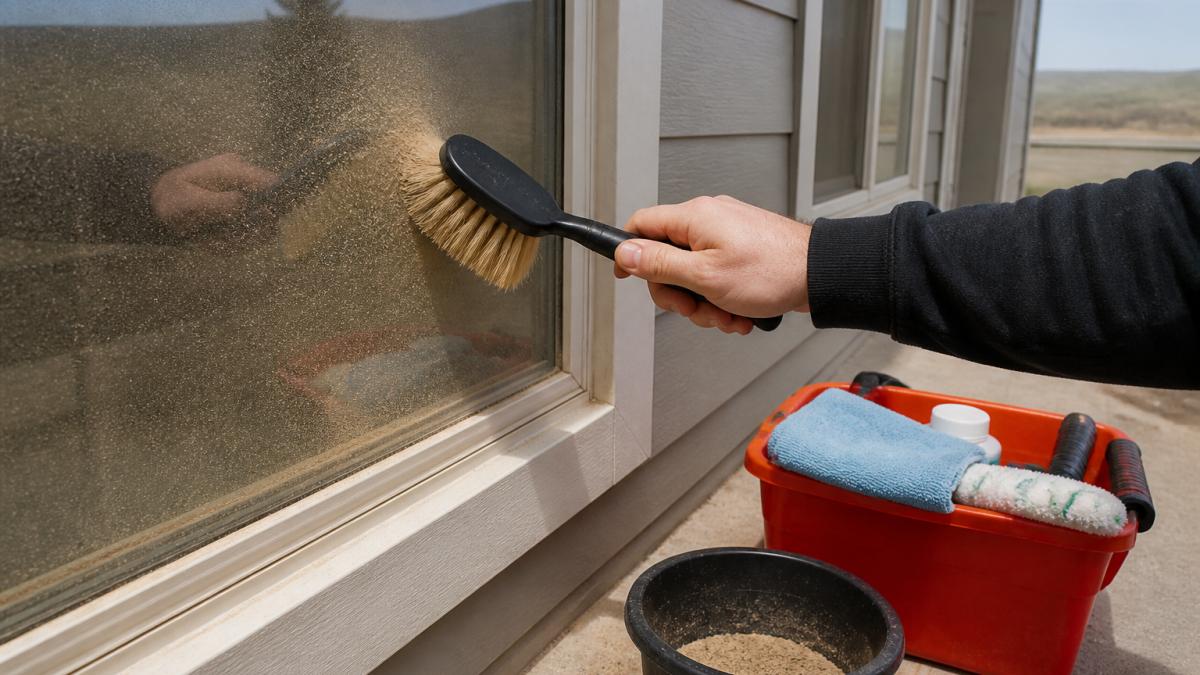
Work top to bottom. Use light, overlapping strokes, and shake the cloth out or swap to a clean one as it loads up. You’ll see a pale film come off. That’s the dust you just saved yourself from smearing.
A few rules for this pass:
- Never press hard. Loess is abrasive when dry. Let the cloth do the work.
- Don’t use circular motions yet. Straight strokes lift dust; circles grind it in.
- Do the frames and sills first, or last, but not in the middle. Dust from the sill will land on glass you just cleaned.
- Work in shade if you can. Sun bakes the film and dries your cloth too fast.
If the dust is thick, do two dry passes. The second one takes a minute and saves you ten minutes of chasing streaks.
Step 2: Wash the Glass With a Simple Cleaning Solution
Once the loose dust is gone, wash the glass with a mild solution and clean water. A few drops of dish soap in a bucket of cool water handles most dusty windows. For heavier film, add a splash of white vinegar.
Skip ammonia-heavy glass cleaners on dusty glass. They flash off fast and leave the residue behind.
Here’s the wash sequence that works:
- Dip your sponge or scrubber in the solution and squeeze out the excess.
- Wash in small sections, top to bottom, using straight strokes.
- Scrub the edges and corners where dust collects.
- Rinse with clean water before the solution dries.
- Squeegee or buff dry immediately.
Change your water when it turns cloudy. Dirty water is just dust in a bucket, and you’ll be painting it back on.
Washing in direct sun is the fastest way to get streaks. The solution dries before you can rinse it, and dried soap film is harder to remove than the dust was.
How to Clean Windows Without Streaks
Streaks come from three things: leftover dust, dried solution, and dirty rinse water. Fix those three and the glass comes out clear.
The order matters more than the product. Dry-dust, wash, rinse, buff. Every time.
A few habits that make the difference:
- Work in shade or on a cloudy day. Sun is the enemy of a streak-free finish.
- Rinse with clean water, not the wash bucket. This is the step most people skip.
- Buff with a dry, lint-free cloth right after the squeegee passes.
- Do small sections. A whole window dries before you finish it.
- Keep a dry cloth for the edges, where water pools and runs.
If you do get streaks, don’t scrub them. Re-wet the section lightly, rinse, and buff dry. Scrubbing dried film just spreads it.
One more thing: check the glass in raking light, from the side. That’s how you’ll spot the haze that straight-on light hides.
How to Clean Dusty Window Screens
Dusty screens are the quiet culprit behind dirty-looking windows. You clean the glass, and the window still looks dull because the screen in front of it is holding a layer of loess.
The good news: screens are easy. The better news: you don’t need to remove them for a light cleaning.
For a quick pass, dry-brush both sides with a soft brush, then wipe with a barely damp microfiber cloth. Work gently. Pushing hard bends the mesh.
For a deeper clean:
- Take the screen out and lay it flat.
- Dry-brush both sides to lift loose dust.
- Wash with mild soapy water and a soft brush.
- Rinse with clean water from the back side.
- Let it dry fully before reinstalling.
Don’t hose a screen at high pressure. It stretches the mesh and pushes dust deeper into the weave.
If your screens are torn or the frames are bent, that’s a repair job for someone else. We’ll point it out.
How to Clean Window Sills, Frames, and Tracks
Sills, frames, and tracks collect the most dust and get cleaned the least. They’re also where the dust comes from when a window looks dirty again a week after you cleaned it.
Start dry. Use a soft brush or a dry cloth to lift the loose loess out of the corners and along the sill.
Then wipe with a damp cloth, and dry right away. Standing water in tracks is what leads to grime and, over time, to problems with the window itself.
A quick working order:
- Sills and frames first, dry
- Tracks second, dry, with a toothbrush
- Damp wipe of all three
- Glass last, so nothing falls on your clean panes
We do a quick wipe of tracks as part of our window cleaning, but we don’t deep-clean them. If your tracks have years of packed grit, that’s a bigger job than a wipe-down.
Protect Yourself, Your Water, and Your Windows
This is the part most window-cleaning guides skip, and on the Palouse it matters.
Dust exposure. A dry brush sends fine silt back into the air, and a full house of windows means a lot of it.
Water and runoff. Wash water with silt in it is basically thin mud. Do not dump buckets into a storm drain or let them run across a neighbor’s driveway or into the street.
Protecting the windows themselves. Loess is abrasive when dry and slightly alkaline when wet, so a few cautions are worth repeating:
- Never scrape dry glass with anything hard. A razor blade or scraper on dry silt drags grit across the surface.
- Skip abrasive pads and powders. They dull glass and can scratch coatings.
- Do not let solution dry on the glass. Dried soap film bonds to silt and is harder to remove than the dust was.
- Keep grit off your cloths by shaking them out often and swapping to a clean one.
- Check seals, gaskets, and screens as you go. Silt packs into the gaps around seals and can work its way into the frame. Note anything cracked, torn, or pulling away.
Ladder safety, briefly. Only go up if you are comfortable and the ground is dry and level. Wear soft-soled shoes, keep your hips inside the rails, and take it slow.
Do not hose a dusty window or screen at high pressure. It drives silt deeper into the screen weave and pushes sediment into tracks and seals, which turns a quick cleaning into a repair conversation.
Clean your windows once in late spring after the loess settles and once in early fall before the rains. That rhythm keeps the film from building up and makes each cleaning easier than the last.
Frequently Asked Questions
Should you dust windows before washing them?
Yes, always. Loess dust is so fine that the moment water hits it, it turns into a muddy paste that smears and scratches. Knock the loose dust off first with a dry cloth or soft brush, working top to bottom so dust falls away from what you already cleaned. Only after the glass is free of loose dirt should you bring out a damp cloth or cleaning solution. This one habit is the biggest difference between a clear pane and a streaky mess.
How do you clean window screens covered in fine dust?
Take the screen out and lay it flat on a tarp or the grass. Brush both sides with a soft brush or vacuum the loose dust off first, then wipe with a damp sponge and a little dish soap in water. Rinse with a hose on low pressure and let it air dry completely before putting it back. Skipping the dry step just pushes loess deeper into the mesh, so dust it before it gets wet.
How do you keep dusty windows from streaking?
Work in shade or on a cloudy day, clean in small sections, and buff the glass dry with a clean microfiber or lint-free cloth before the solution dries on its own. Change your water often, since dirty water leaves a film. Avoid washing in direct sun, which dries the solution too fast and bakes streaks in. If a haze remains, a fresh damp cloth followed by a dry buff usually clears it.
How often should windows be cleaned during cottonwood season or harvest?
During heavy dust and cottonwood season, exterior glass and screens collect a visible film fast, so a quick dry dusting every couple of weeks plus a full wash when it builds up keeps things manageable. Once harvest and windy stretches pass, a thorough cleaning of glass, screens, and sills resets everything. Most Palouse homes do well with a full window cleaning once or twice a year, timed around the dusty months.
Loess dust is stubborn, but it’s predictable. Dry first, wash second, rinse with clean water, and buff dry. That’s the whole method.
If you’d rather spend a Saturday doing something else, Me And My Truck has been cleaning Palouse windows since 1987. We handle inside and outside glass, screens, and a quick wipe of the tracks, and we’ll flag anything that needs a repair. Call or text (208) 882-5641 or send a photo for a free quote.