Table of Contents
- What You’ll Need to Clean Windows on the Palouse
- Preparing Your Glass and Removing Dust
- How to Clean Windows Without Streaks
- How to Clean Window Screens Safely
- Seasonal Window Cleaning Tips for the Palouse
- Cleaning Window Frames and Sills
- Safety Tips for Exterior and Upper-Story Windows
- Frequently Asked Questions
Last Updated: October 7, 2026
What You’ll Need to Clean Windows on the Palouse
Window cleaning tips start with the right tools. You don’t need much, just what actually works for loess dust and Palouse grime.
A squeegee is essential. Get one with a rubber blade, 10 to 14 inches wide. Soft rubber works better than hard plastic.
A mop or soft scrubber handles the heavy lifting. Microfiber works well. So does a natural sponge.
For cleaning solution, you have two paths. Homemade works fine: mix water with a bit of dish soap or ammonia. Store-bought solutions work too.
Gather these other items:
- Two buckets (one for soapy water, one for rinsing)
- Clean rags or lint-free cloths for drying
- A step ladder for upper windows
- Soft-soled shoes for safety if you’re working on a roof or high ladder
That’s it. You’re ready to start.
Preparing Your Glass and Removing Dust
Before you clean, prep the glass. This step saves time and prevents streaking later.
Start by removing loose dust. Use a dry cloth or soft brush. Wipe the entire surface, top to bottom, inside and outside. This pulls away the first layer of grime.
Pay attention to the window frames and sills. Dust collects there. A quick wipe removes debris before it gets wet and sticky.
Tackling Loess Dust and Seasonal Grime
Loess dust on the Palouse is different from regular dirt. It’s fine, powdery, and clings to glass like it’s glued on. Winter grime adds another layer, moisture, dust, and residue all mixed together.
The trick is not to rush the prep work. Wet loess dust turns to paste. You’ll spend twice as long scrubbing if you don’t dry-clean first.
For heavy seasonal buildup:
- Use a dry cloth to remove as much dust as possible
- Don’t press hard, let the cloth do the work
- Focus on edges and corners where dust collects
- Check the window tracks and frames carefully
If you’re cleaning after cottonwood season, expect fine, sticky residue. The same approach works. Dry first, then wet clean.
How to Clean Windows Without Streaks
The secret to streak-free windows is technique, not products. Most people fail because they skip steps or use the wrong motion.
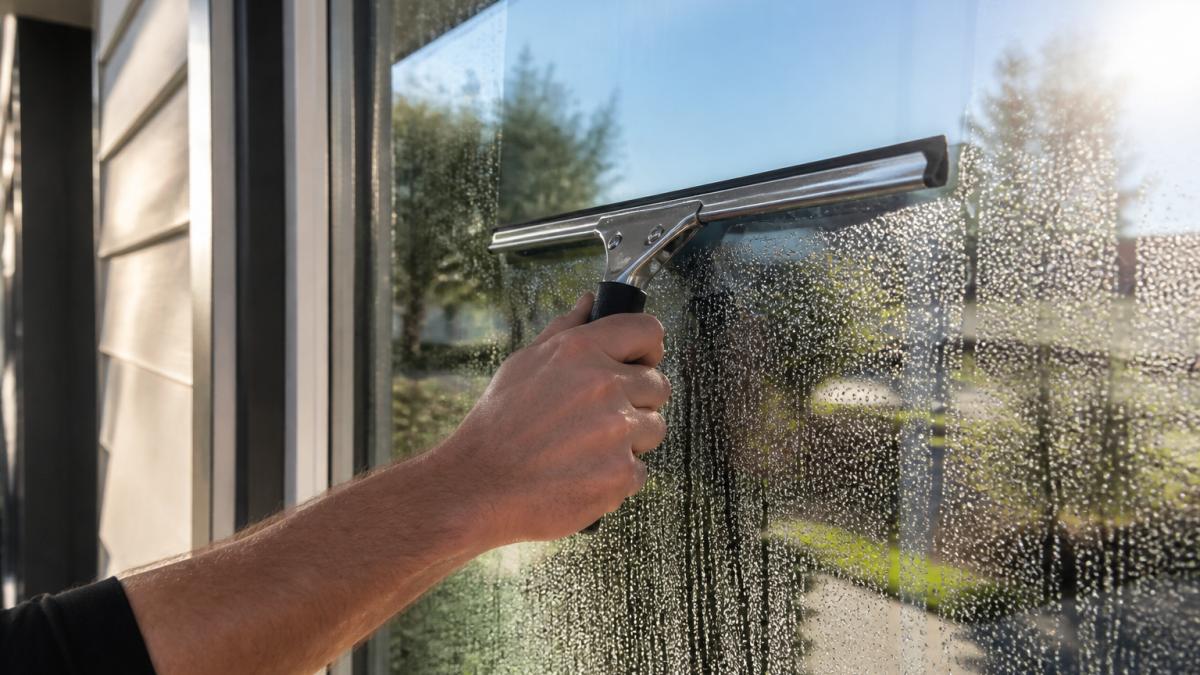
Start with your cleaning solution. Fill one bucket with soapy water and one with clean rinse water.
Dip your mop or soft scrubber into the soapy water. Work from top to bottom. This keeps dirty water from running over already-clean glass.
Scrub in gentle circles. Don’t press hard. The goal is to loosen grime, not force it off. Let the soap do the work.
The Squeegee Technique
Once the glass is wet and soapy, the squeegee takes over. This is where most people go wrong.
Hold the squeegee at a slight angle, about 45 degrees. Start at the top corner. Pull down in one smooth motion. Don’t stop or lift the blade mid-stroke.
Wipe the squeegee blade on a dry cloth between passes. Water and soap buildup on the blade causes streaks.
Work your way down the window in overlapping passes. Each stroke should overlap slightly with the last. This catches water you might miss.
For the edges:
- Use a dry cloth to catch water that runs down the sides
- Wipe the frame as you go
- Don’t let water pool at the bottom
Buffing and Drying for a Flawless Finish
After you’ve squeegeed, a final buff removes any remaining water spots or streaks.
Use a clean, lint-free cloth. Microfiber works best. Buff the entire surface in small circles. This also polishes the glass and makes it shine.
The key is drying completely. Any moisture left behind will spot as it evaporates.
How to Clean Window Screens Safely
Screens trap dust and pollen. They need cleaning too, but handle them carefully.
Remove the screen from the window frame. Most screens slide out or unhook easily. Check your window type, some are fixed differently.
Lay the screen flat on a clean surface. Use your soft mop or brush with soapy water. Scrub gently on both sides.
Rinse thoroughly with clean water. Let it dry completely before reinstalling. Water trapped behind the screen causes problems.
Wipe the screen track while the screen is out. Dust and debris collect there.
Seasonal Window Cleaning Tips for the Palouse
Most window-cleaning advice is written for somewhere else. Here, the calendar matters as much as the technique. Get the timing right and the glass stays clear longer. Get it wrong and you’re scrubbing dried-on paste two weeks later.
The Palouse Window Calendar
Think of the year in four passes, not one.
- Late winter (February to early March): A good time to knock down the gray film that builds up over the cold months. Pick a stretch of days above freezing with no wind.
- Late spring (after cottonwood settles): The big one. Cottonwood fluff and pollen coat everything. Wait until the fluff has mostly stopped flying, then clean. Cleaning mid-fluff just means doing it twice.
- Late summer (August): Loess dust has had months to build up on west- and south-facing glass. A mid-season pass keeps windows from getting gritty.
- Early fall (before the first hard freeze): Clean now so winter grime lands on clean glass instead of last summer’s dust. This one pays off all winter.
That’s roughly two to four cleanings a year for most homes.
Why Timing Beats Elbow Grease
A few local conditions decide whether your cleaning day goes well or goes sideways.
Temperature. Glass and cleaning solution both behave differently in the cold.
Direct sun. Sun is the enemy of streak-free glass.
Wind. Loess dust moves on the wind, and so does spray. A breezy day means you’re fighting dust landing on wet glass behind you.
Rain. A good rain actually helps. It softens the dust layer so it lifts off more easily.
If you can only pick one day, pick a calm, overcast morning in late spring after the cottonwood has settled. That single cleaning does more for your windows than three rushed ones.
Cottonwood Season: The Sticky One
Cottonwood fluff isn’t just lint. It carries a fine, sticky residue that grabs glass and holds on. The longer it sits, the harder it sets.
The mistake is trying to wash it off wet. Wet cottonwood residue smears and spreads. Dry-brush it first with a soft cloth or brush to lift the bulk, then wash. If it’s really set, a second pass with fresh solution does more than scrubbing harder.
Winter Grime: Mud, Spray, and Moisture
Winter leaves a layer that’s part mud, part road spray, part moisture film. It’s stubborn because it’s had months to cure.
Clean in early fall before the freeze so winter has less to stick to. If you’re cleaning in the cold, use warm (not hot) water, work in small sections, and dry immediately. Skip it entirely if it’s below freezing and wet, you’ll just make ice.
After the Clean: Making It Last
A clean window stays clean longer if you set it up right. Wipe the sills and frames dry after cleaning so dust has less to cling to. Keep the screens in good shape so they catch the pollen before it reaches the glass.
If the calendar math sounds like more trouble than it’s worth, that’s a fair call. Me And My Truck has been cleaning Palouse windows since 1987, and we know exactly when the cottonwood hits and when the loess settles.
Cleaning Window Frames and Sills
Frames and sills hold dirt. They’re easy to overlook but important.
Wipe frames with a damp cloth. Use the same soapy solution as the glass.
For sills, a soft brush works well. Loosen debris first, then wipe with a damp cloth.
Check for mold or mildew on sills, especially in shaded areas. A mix of water and a small amount of vinegar kills it.
Don’t forget the window tracks. These collect loess dust and debris. A quick wipe keeps windows operating smoothly.
Safety Tips for Exterior and Upper-Story Windows
Exterior windows are where the job gets real. Inside, the worst that happens is a smudge. Outside, you’re on a ladder, and the ground under it matters as much as the ladder itself. Take this part seriously and the rest is easy.
Before You Climb
A few minutes of setup prevents most problems.
- Check the ground. Ladder feet need firm, level footing. On the Palouse, that’s not always a given. Soft spring soil, wet grass, and gravel all shift under weight. If the ground gives, move the ladder.
- Look up. Power lines, low branches, and gutter edges are all things you don’t want to meet at height. Give yourself clearance.
- Set the angle. A ladder should lean so the base sits out roughly a quarter of its working height from the wall. Too steep and it tips back. Too shallow and the feet slide out.
- Extend past the edge. The top of the ladder should reach a few rungs above the surface you’re stepping onto or working at, so you have something to hold.
- Have a spotter. If someone’s around, have them hold the base. It’s a small thing that makes a big difference.
Working at Height Without Drama
Once you’re up, the rules are simple.
Keep your belt buckle between the rails. If you have to lean out past that, you’re too far, climb down and move the ladder. Never lean sideways to reach a corner.
Wear soft-soled shoes with good grip. Hard soles slide on wet rungs and wet sills.
Work on dry, calm days. Wind and wet make ladders unpredictable. If the weather turns, stop. The windows will still be there tomorrow.
Know Your Limits
Here’s the honest part. Some windows just aren’t a ladder job. Second-story glass over a steep slope, tall fixed panes, windows above a porch roof, anything where you’d be reaching or stretching, those are the ones to leave alone.
If you’re not comfortable on a ladder, don’t go up. That’s not a failure, it’s good judgment. And if the window is above the reach of a safe ladder setup, it’s beyond what a homeowner should attempt.
Never stand on the top two rungs of a stepladder or the top rung of an extension ladder. Never set a ladder on a sloped or soft surface without stabilizing it. And never work alone at height if you can avoid it.
When to Hand It Off
Upper-story exterior windows, tall fixed glass, and anything that needs a lift to reach safely are jobs for equipment most homeowners don’t have. Me And My Truck cleans windows from ladders and lifts, and we handle the high, awkward ones all the time. If you’d rather not spend your Saturday on a ladder, that’s what we’re here for. Call or text (208) 882-5641 or send a photo for a free quote.
Frequently Asked Questions
How do you clean windows without leaving streaks?
Use a squeegee with a smooth, downward stroke and wipe the blade between each pass with a clean cloth. After squeegeeing, buff the glass with a microfiber cloth or crumpled newspaper in circular motions. The key is using the right tools and drying thoroughly, any water spots left behind will show as streaks once they dry.
When is the best time to clean windows on the Palouse?
Spring and fall are ideal. Clean before cottonwood season hits in late spring to remove dust buildup. Fall cleaning removes cottonwood debris and prepares windows for winter. After a heavy windstorm or during loess dust season, spot-clean as needed. Avoid cleaning during rain or when the sun is directly on the glass, it dries too fast and leaves streaks.
What’s the safest way to clean upper-story windows?
Use a sturdy ladder on level ground and have someone spot you. Wear soft-soled shoes for better footing. Don’t overreach, move the ladder instead. If you’re not comfortable working at height, that’s the right call. Me And My Truck handles exterior window cleaning from ladders and lifts if you’d rather not tackle it yourself.
How do you clean window screens without damaging them?
Remove the screen and lay it flat. Use a soft brush or old toothbrush to loosen dust and debris gently. Rinse with a garden hose on low pressure, never use high pressure. For stubborn grime, soak the screen in warm soapy water for 15 minutes, then rinse. Let it dry completely before reinstalling. Handle the mesh carefully to avoid tears.
Window cleaning on the Palouse isn’t complicated. The dust and grime are stubborn, but the technique is straightforward. If you’d rather skip the ladder work and let us handle it, we’re happy to help. Call or text (208) 882-5641 or send a photo for a free quote.