Table of Contents
- Why Gutters Overflow During Heavy Rain
- Identify Clogged Downspout Symptoms Before They Cause Overflow
- How to Clean Gutters Safely From the Ground
- How Often to Clean Gutters to Prevent Gutter Overflow
- Check Downspouts and Drainage Flow
- What to Do If Gutters Overflow During a Storm
- Prevent Gutter Overflow Year-Round
- Frequently Asked Questions
Last Updated: October 8, 2026
Why Gutters Overflow During Heavy Rain
Gutters overflow when they can’t drain water fast enough. Heavy rain, clogged debris, or blocked downspouts are the usual culprits. When water backs up, it spills over the edges instead of flowing down and away from your home. This causes damage to siding, foundation, and landscaping.
The Palouse gets its share of intense rainfall. Add cottonwood fluff, needles, and loess dust to the mix, and your gutters fill up quick. If you don’t clean them regularly, you’re asking for overflow problems.
Here’s the thing: preventing gutter overflow isn’t complicated. It comes down to keeping your gutters clear and making sure water flows freely to the downspouts. We’ve been helping Palouse homeowners solve this problem since 1987, and the solution is always the same: clean gutters and working drainage.
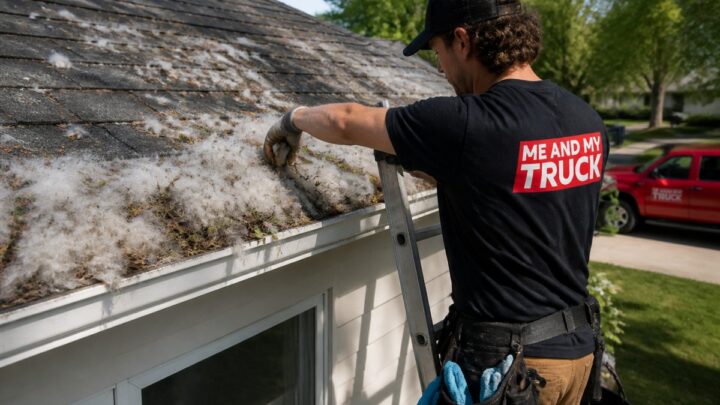
Cottonwood season hits hard in spring and early summer. If you notice white fluff clogging your gutters during these months, that’s your first warning sign that overflow is coming.
Identify Clogged Downspout Symptoms Before They Cause Overflow
A clogged downspout is the sneakiest cause of gutter overflow. Water backs up in the gutter because it has nowhere to go. You might not notice the problem until rain starts and water spills over the edge.
Look for these warning signs:
- Water pooling in gutters even when it’s not raining
- Gutters sagging or pulling away from the house
- Water dripping from gutter seams instead of flowing to the downspout
- Visible debris sticking out of downspout openings
- Wet spots on siding below gutters during rain
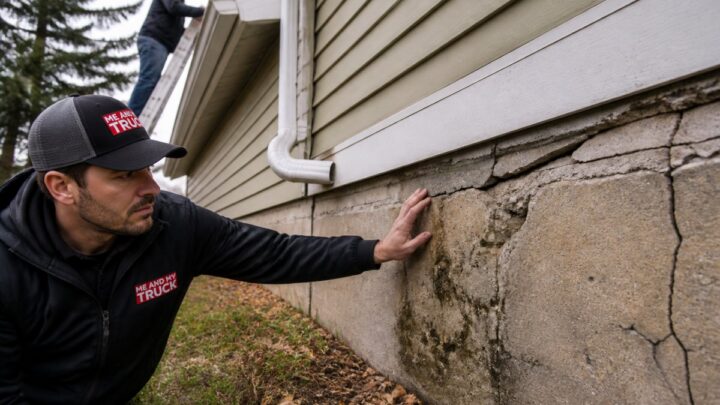
- Foundation dampness or erosion near downspout outlets
If you see any of these, your downspout likely has a blockage. The sooner you clear it, the better. A small clog becomes a big problem during the next heavy rain.
Ignoring these signs can lead to water damage inside your walls, foundation cracks, and expensive repairs. A quick inspection saves you from costly problems later.
How to Clean Gutters Safely From the Ground
You can clean gutters yourself if you’re comfortable working at height. Use a sturdy ladder, take your time, and stop if you’re not feeling safe.
What You’ll Need
- A sturdy ladder (preferably with a standoff arm to keep it away from gutters)
- Work gloves (leather or rubber)
- A hand scoop or small shovel
- A bucket or bag to catch debris
- A hose with a spray nozzle
- Soft-soled shoes for ladder work
Step-by-Step Cleaning Process
Step 1: Position your ladder safely. Place it on level ground. Make sure it’s stable before climbing. Keep the ladder away from power lines.
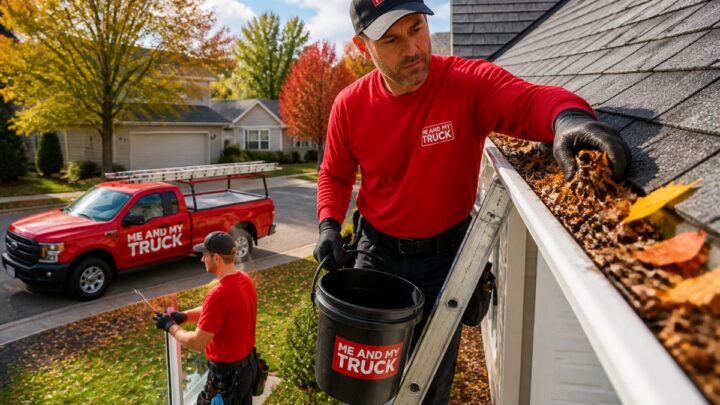
Step 2: Scoop out loose debris. Use your hand scoop to pull out leaves, needles, and buildup. Work from one end of the gutter toward the downspout. Drop debris into your bucket or bag.
Step 3: Check the downspout opening. Once you reach the downspout, make sure the opening is clear. If you see a clog, you may need to clear it from below (more on that in the next section).
Step 4: Flush the gutter with water. Use your hose to rinse the gutter. Start at the end away from the downspout and work toward it. This pushes remaining debris toward the downspout and checks for drainage problems.
Step 5: Test downspout flow. Watch where water exits the downspout. It should flow freely away from your foundation. If it pools near the house, you may need to extend the downspout or improve drainage.

Common Mistakes to Avoid
- Leaning too far sideways. Stay centered on the ladder. Move the ladder instead of stretching.
- Skipping the downspout check. A clogged downspout defeats the purpose of cleaning gutters.
- Cleaning in wet conditions. Wait for dry weather. Wet leaves are heavy, and wet ladders are slippery.
- Ignoring safety gear. Wear gloves and soft-soled shoes. They make a real difference.
- Rushing the job. Take breaks. Gutter cleaning is slow work, not a race.
The key to safe gutter cleaning is taking your time and staying stable on the ladder. If you’re uncomfortable at height, that’s a good reason to offer to handle it if they’d rather not. Call or text (208) 882-5641 or send a photo for a free quote.
How Often to Clean Gutters to Prevent Gutter Overflow
Most homes need gutter cleaning once or twice a year. The timing depends on what’s above your gutters.
If you have trees nearby, clean in late fall after leaves drop and again in spring after cottonwood season. If your roof is mostly clear, once a year in fall is usually enough.
The Palouse throws curveballs. Heavy spring rains combined with cottonwood fluff can fill gutters fast. If you notice debris building up midseason, don’t wait for your scheduled cleaning. A quick cleanup prevents overflow during the next storm.
Pay attention to what lands in your gutters. Pine needles, cottonwood fluff, and loess dust are common here. If you’re seeing a lot of buildup between cleanings, bump up to twice a year.
Check Downspouts and Drainage Flow
A clogged downspout is invisible until it causes overflow. Here’s how to check and clear it.
From the ground: Run your hose into the downspout opening at the top. If water backs up instead of flowing through, there’s a blockage.
Locate the clog: Most clogs sit near the elbow where the downspout bends. Debris gets trapped there easily.
Clear it from below: If the clog is accessible, you can sometimes push it out from the bottom. Place a bucket under the downspout opening and tap or shake the downspout gently. Debris may fall out.
Use a plumbing snake if needed: A small plumbing snake can break up stubborn clogs. Feed it up the downspout slowly and work it back and forth.
Check the outlet: Make sure water exits away from your foundation. If the downspout empties right next to your house, water pools there and causes foundation problems. Extend it or add a splash block to direct water away.
If your downspout clogs repeatedly, it might be bent or damaged. That’s a problem for a repair company to assess. We can point out the issue so you know what to fix.
What to Do If Gutters Overflow During a Storm
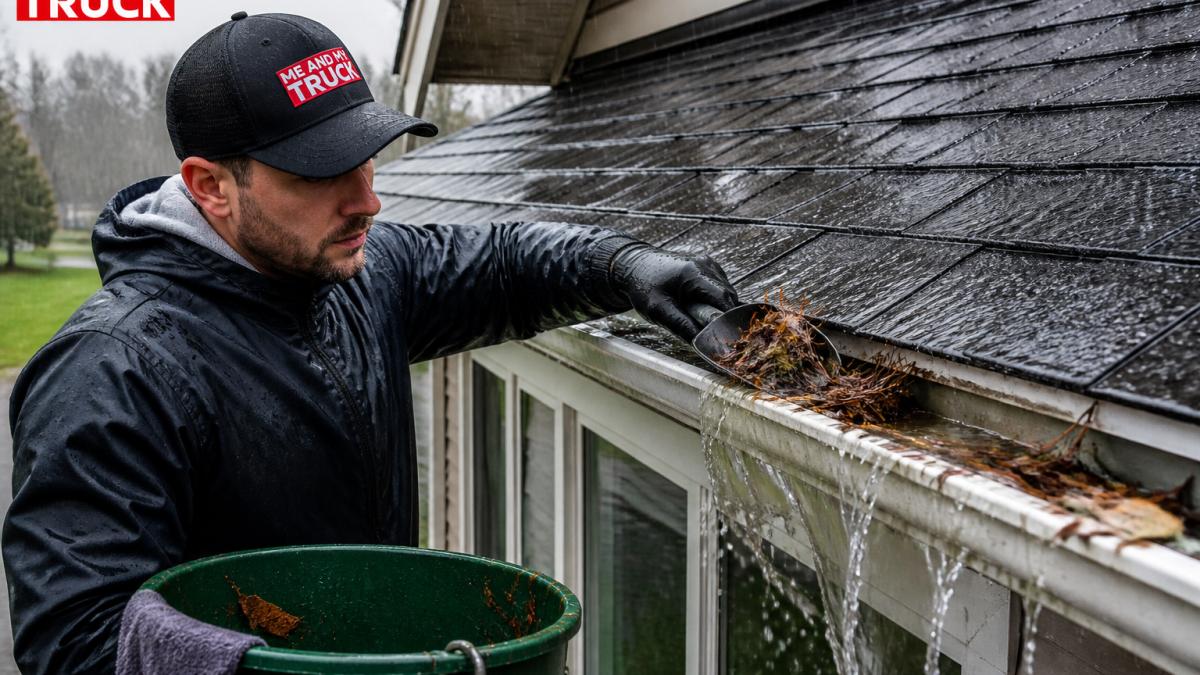
If it’s actively raining and water spills over your gutters, your priority is protecting your foundation and siding.
During the storm:
- Don’t climb a ladder in rain. Wait for dry conditions.
- Place buckets or tarps at ground level to catch water and direct it away from the foundation.
- If water pools near the foundation, use a shovel or hose to push it away.
After the storm:
- Inspect gutters and downspouts for obvious blockages.
- Clean out any debris you can safely reach.
- Check for water damage on siding and around the foundation.
- Run your hose through downspouts to test flow.
If overflow caused water to enter your home or damage your foundation, that’s time to call a repair specialist. We can point out where the problem is so you know what needs fixing.
Prevent Gutter Overflow Year-Round
Preventing overflow is easier than fixing water damage. Here’s your game plan.
Spring: Clean gutters after cottonwood season winds down. Check downspouts for winter debris.
Summer: Do a quick visual check after heavy rains. Make sure gutters are draining properly.
Fall: Clean gutters after leaves drop. This is your biggest cleaning of the year.
Winter: Keep an eye on gutters during freeze-thaw cycles. Ice dams can trap water and cause overflow.
Regular cleaning is the best prevention. Once or twice a year keeps most gutters flowing freely. If your home is surrounded by trees or you get a lot of debris, you might need more frequent attention.
When you do clean, take time to inspect everything. Look for sagging sections, separated seams, or downspouts that aren’t draining properly. Catching small problems early stops them from becoming big ones.
Frequently Asked Questions
Why do gutters overflow during heavy rain?
Gutters overflow when debris like leaves, cottonwood fluff, and needles block water from flowing freely toward the downspouts. On the Palouse, cottonwood season and seasonal leaf drop fill gutters quickly. If downspouts are also clogged or too narrow for the volume of water, water backs up and spills over the edges instead of draining away from your foundation.
How can I tell if a downspout is clogged?
Look for water overflowing from the gutters during rain, even though the gutter itself looks clear. Water pooling near your foundation or not flowing from the downspout outlet is another sign. You can also climb a ladder and pour a bucket of water into the gutter near the downspout, if it backs up instead of draining, the downspout is blocked. Debris, ice buildup, or crushed sections can all restrict flow.
How often should I clean my gutters to prevent overflow?
Once or twice a year is right for almost every home. If you’re in an area with heavy tree coverage or cottonwood trees nearby, aim for twice a year: once in late fall after leaves drop and again in spring after cottonwood season. A single cleaning in fall works for many homes. If you notice overflow during rain or see debris backing up, don’t wait, clean them sooner.
Can I safely check my gutters from the ground?
Yes. Use binoculars to spot debris from below without climbing. Look for dark patches, standing water, or debris piling up. You can also watch during a rain to see if water is overflowing or flowing normally. If you do climb a ladder, make sure it’s on level ground, wear soft-soled shoes for better grip, and take your time. Don’t go up if you’re not comfortable with heights.
If gutter cleaning isn’t your thing, we handle it all the time. Me And My Truck cleans gutters by hand and hauls away every bit of debris. We know the Palouse and what clogs gutters here. Call or text (208) 882-5641 or send a photo for a free quote.