Table of Contents
- How Clogged Gutters Lead to Foundation Damage
- Signs of Foundation Problems You Can See
- Can Clogged Gutters Cause Basement Flooding
- Downspout Drainage Problems and Water Pooling
- Soil Erosion Around Foundation: A Hidden Gutter Problem
- Inspect Your Gutters and Foundation: A Step-by-Step Guide
- Prevent Foundation Damage: Gutter Maintenance Matters
- Conclusion
- Frequently Asked Questions
Last Updated: October 18, 2026
How Clogged Gutters Lead to Foundation Damage
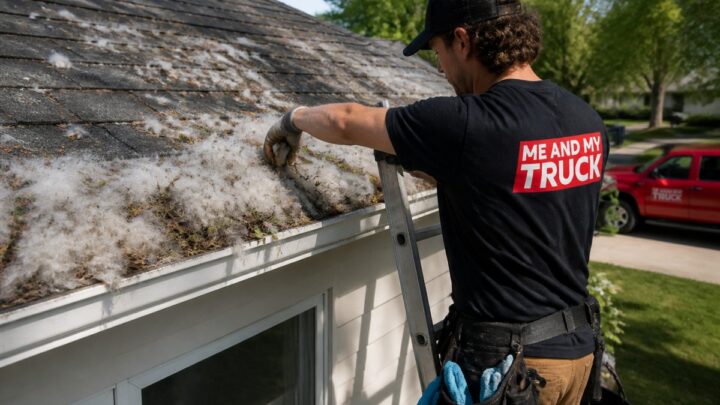
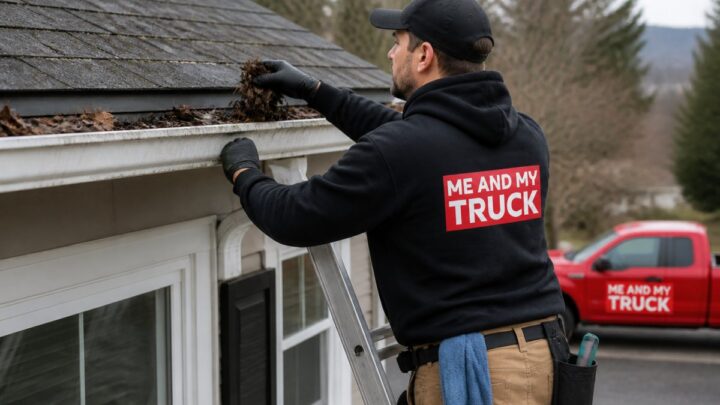
When gutters fill with leaves, twigs, and debris, water can’t flow where it’s supposed to go. Instead of traveling down the downspout and away from your home, rainwater backs up and spills over the edge, the start of a chain reaction that creates signs of foundation damage from clogged gutters.
The water pathway: overflow to foundation
Clogged gutters force water down the outside of your home, where it collects around the base of your foundation and soaks into the surrounding soil.
The Palouse gets significant rainfall, especially in spring and fall. When gutters are clogged, every rain event sends water straight to your foundation. Me And My Truck has been cleaning gutters here since 1987, and we’ve seen what happens when homeowners skip this maintenance.
Water doesn’t just sit on the surface. It seeps down, pools in the soil, and presses against your foundation from outside, building hydrostatic pressure that looks for weak spots.
Why standing water becomes a structural threat
Standing water around your foundation is serious. Soil expands as it absorbs water, pushing harder against your foundation walls.
Water also carries minerals and acids that break down concrete, and it freezes in winter, expanding and creating new cracks.
Additionally, water attracts pests. Mosquitoes breed in pooled water. Termites and other insects are drawn to damp soil.
Signs of Foundation Problems You Can See
The signs of foundation damage from clogged gutters often show up in visible ways. You don’t need a specialist to spot these warning signs.
Cracks in the foundation and basement walls
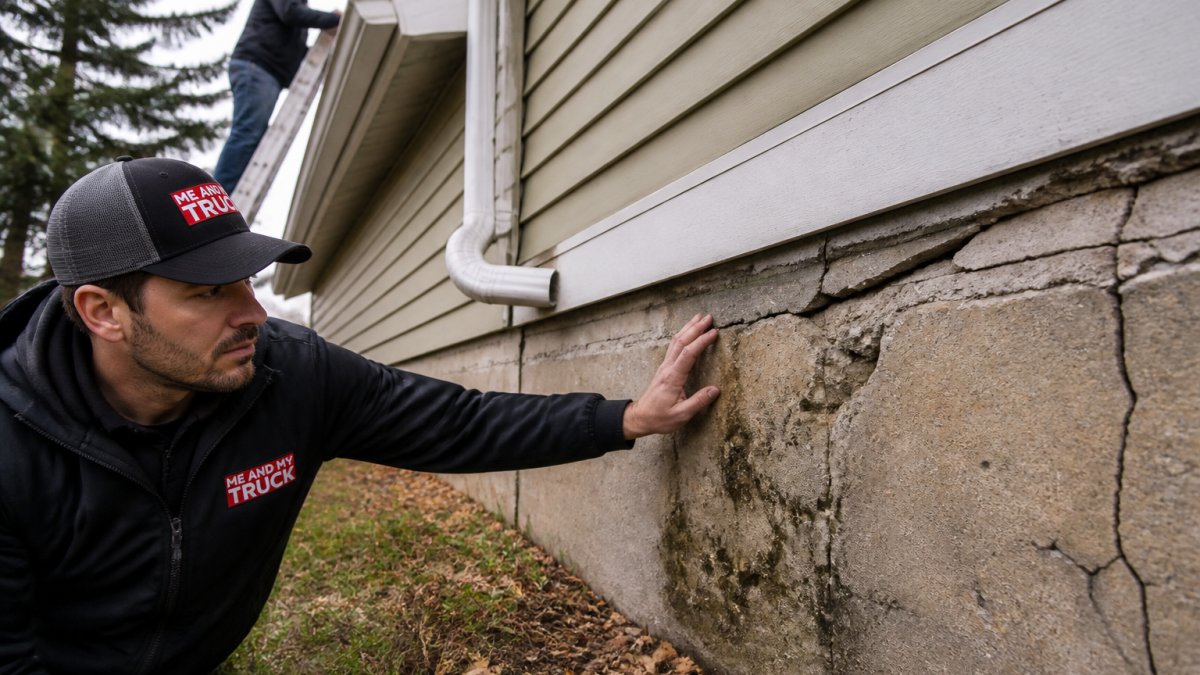
Cracks are the most obvious sign of foundation stress.
Vertical cracks run down your foundation. Horizontal cracks are more concerning, they indicate serious pressure from water or soil.
Check your basement walls carefully. Cracks often start small and grow as water pressure increases; new cracks mean water is actively damaging your foundation.
Water stains, efflorescence, and damp basement signs
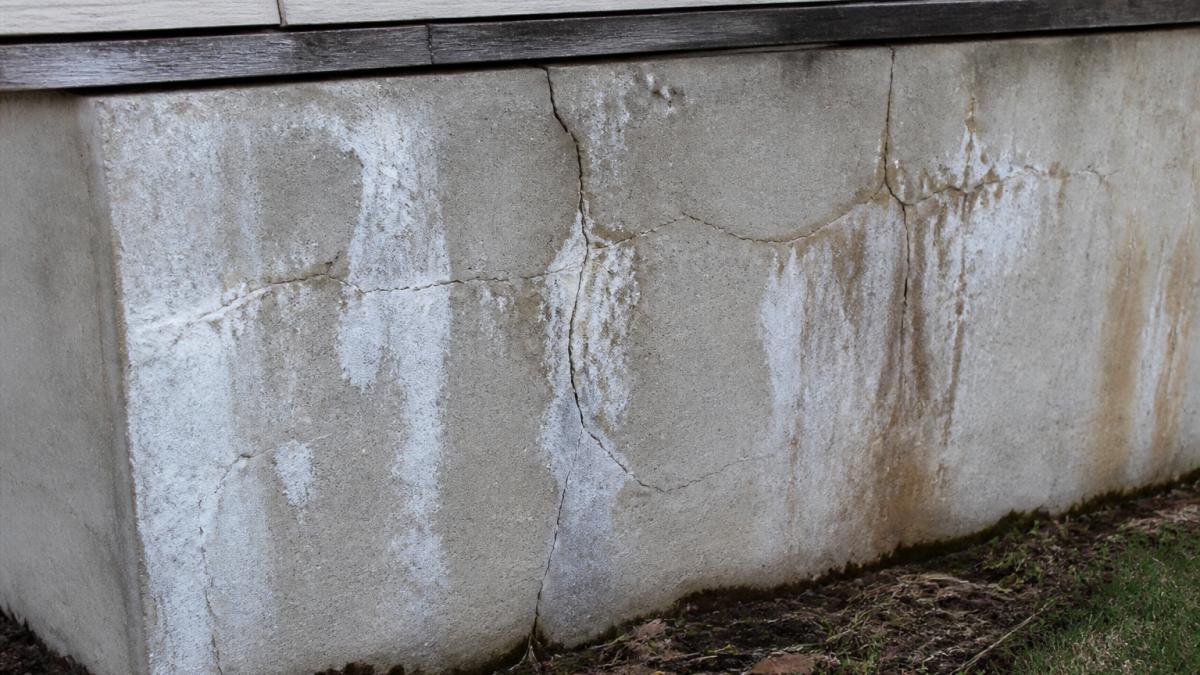
Water stains on your foundation walls, dark streaks or discolored patches, show where water has been traveling, even if you don’t see active leaks yet.
Efflorescence is a white, chalky deposit on foundation walls and concrete.
A damp basement or crawlspace is another warning sign, musty smells, moisture on walls, wet spots on the floor.
Structural warning signs inside the home
Foundation problems eventually show up inside your home. Doors and windows that stick or won’t close properly can indicate settling. Uneven or sloping floors suggest structural movement.
Cracks in interior drywall, especially near window and door corners, often signal foundation stress. Cracks in basement concrete floors follow the same pattern.
Can Clogged Gutters Cause Basement Flooding
Yes. Clogged gutters are one of the most common causes of basement flooding.
Basement flooding happens quickly during heavy rain if your gutters are blocked.
The damage accelerates in spring, when Palouse rainfall combines with snowmelt.
Prevention is far simpler than dealing with a flooded basement. Keeping gutters clear means water flows away from your home instead of pooling at your foundation.
Downspout Drainage Problems and Water Pooling
A clean gutter with a bad downspout is like a clean sink with a plugged drain.
How to check if your downspouts are working
You don’t need a fancy test. You need rain, or a hose.
The rain test. During a steady rain, walk the perimeter with an umbrella and watch each outlet.
The ground test. After rain, press the heel of your hand into the soil at each outlet.
The erosion test. Look for bare soil, small channels, or a divot carved below an outlet.
Proper discharge distance and grading
Check the discharge. Stand at the outlet and pace off 4 to 6 feet.
Check the slope. Grading is where the water goes after it leaves the downspout.
A useful target is roughly a 6-inch drop over the first 10 feet from the foundation.
Check the low spots. Walk the yard after rain and find where puddles form.
Don’t pile soil up against siding or the top of the foundation wall to fix grading. You want a gentle slope, not a berm. Soil stacked against the house holds moisture against the wall and can wick into the framing. Keep the soil line a few inches below the siding and slope it away from there.
Buried downspouts and underground drains
Some homes route downspouts into buried drain lines that carry water to a pop-up emitter or a dry well. When those work, they’re great.
Signs a buried line has failed:
- Water backs up out of the downspout during rain instead of draining away.
- The ground along the buried line stays soggy long after rain.
- A pop-up emitter at the end of the line doesn’t pop up during rain.
If you suspect a buried line is clogged or broken, that’s a job for a drainage or repair company. No amount of gutter cleaning will fix it.
What to do about it
Once you’ve identified the problem, the fixes are usually straightforward:
- Extend short downspouts. Add a splash block or extension so water lands 4 to 6 feet out.
- Redirect outlets. Aim downspouts toward a slope or a gravel-filled dry spot, not at a wall or a low corner.
- Adjust grading. Add a gentle slope away from the foundation, keeping soil below the siding line.
If you’d rather not climb a ladder, Me And My Truck cleans gutters by hand and hauls the debris away, and we’ll point out drainage problems we notice while we’re up there. Give us a call at (208) 882-5641.
Soil Erosion Around Foundation: A Hidden Gutter Problem
Soil erosion from clogged gutter overflow is easy to miss but causes serious long-term damage.
Over time, erosion creates gaps between your foundation and the surrounding earth.
The Palouse has loess soil, which erodes easily when exposed to water.
Inspect the soil around your foundation. Do you see exposed concrete where soil has washed away?
Inspect Your Gutters and Foundation: A Step-by-Step Guide
Most guides hand you a list of things to look at. That’s fine, but a list doesn’t tell you what’s connected to what. The trick is to trace the water.
Step 1: Confirm the gutters are actually clogged
Before you blame the gutters, prove it. On a dry day, look up at the gutter line from the ground.
A quick hand check works too. From a stable ladder on firm, dry ground, reach into the gutter at a few points. If you pull out a mat of leaves, shingle granules, and cottonwood fluff, you’ve found your culprit.
Step 2: Follow the water from the downspout outlet
This is the step most people skip. Stand at each downspout outlet during or right after rain and watch where the water goes. Three outcomes matter:
- It shoots away and disappears into the yard. Good. Move on.
- It dumps straight down at the foundation. Bad. The downspout is too short or aimed wrong.
- It runs along the wall or back toward the house. Worse. Grading is fighting you.
Mark each outlet on a simple sketch of your home. Note which ones dump close, which ones pool, and which ones are fine. That sketch becomes your to-do list.
Step 3: Match symptoms to the water path
Now walk the foundation and check whether each symptom sits where the water actually lands.
- A wet or eroded patch directly below a downspout outlet, almost certainly gutter-related. Fix the discharge first.
- A crack or stain on a wall nowhere near a downspout or gutter overflow point, probably not the gutters. Could be grading, a plumbing leak, or age. Don’t assume.
- Efflorescence low on the wall, near a soggy patch of soil, consistent with overflow. Check the gutter above that section.
If the symptom and the water path line up, you’ve got a working theory. If they don’t, the gutters may still need cleaning, but they aren’t the whole story.
Step 4: Rule out the other usual suspects
Clogged gutters get blamed for a lot. Before you commit, cross off the easy alternatives:
- Grading. Does the ground slope toward the house even where there’s no gutter nearby? If yes, that’s a separate drainage issue.
- Irrigation. A sprinkler head aimed at the foundation wets the same soil a downspout would.
- Downspout connections. A downspout that empties into an underground drain can be clogged or disconnected below grade. Water reappears at the foundation even though the gutter is clean.
Step 5: Rate what you found
Not every sign means the same thing. A simple three-tier read helps you decide what to do next:
- Routine maintenance. Gutters are clogged, water overflows, but the soil is firm and there are no cracks, stains, or damp spots. Clean the gutters once or twice a year and recheck after the next big rain.
- Prompt drainage work. You see erosion, soggy soil, or water pooling at downspout outlets, but the foundation itself looks sound. Extend downspouts, adjust grading, and clean the gutters. Recheck in a few weeks.
- Get it assessed. Horizontal cracks, stair-step cracks in masonry, cracks that are widening, efflorescence with active dampness, a damp or flooded basement, or doors and windows that have started sticking. These warrant a foundation professional, and the gutters are only part of the conversation.
Trace the water before you diagnose. A symptom that sits on the water path from a clogged gutter is a gutter problem. A symptom that doesn’t is something else, and worth a closer look either way.
When to call a repair specialist
If you land in the third tier, widening cracks, horizontal cracks, active basement dampness, or sticking doors, call a foundation repair company. They can tell you whether the movement is structural or cosmetic and what repair options exist. Me And My Truck isn’t a repair contractor, but we’ll point out anything we notice during a gutter cleaning so you know what to ask about.
Prevent Foundation Damage: Gutter Maintenance Matters
The best solution is prevention. Keeping your gutters clean prevents the overflow that causes foundation damage.
Clean your gutters once or twice a year, depending on your trees and weather.
After cleaning, inspect your downspouts.
During heavy rain, watch your gutters and downspouts. Do they overflow?
Me And My Truck can handle your gutter cleaning.
Conclusion
Clogged gutters might seem like a minor maintenance issue. But the damage they cause to your foundation is anything but minor.
The good news is this damage is preventable. Regular gutter cleaning keeps water flowing away from your home.
If you’re seeing signs of foundation problems, cracks, water stains, or damp basements, start by checking your gutters.
Frequently Asked Questions
How can you tell whether a downspout is clogged?
During heavy rain, watch where water exits your downspout. If water backs up in the gutter, spills over the edge, or doesn’t flow from the downspout opening, it’s clogged. You can also look inside the downspout opening (safely, from a ladder) for visible debris, leaves, or sediment blocking the pipe. A clogged downspout prevents water from draining away from your foundation, so addressing it quickly prevents pooling and water intrusion.
Can clogged gutters cause basement flooding?
Yes. When gutters overflow because they’re clogged, water spills over the sides and pools around your foundation. That standing water can seep through foundation walls, cracks, or gaps, leading to basement leaks and flooding. The longer water sits against your foundation, the more pressure it exerts and the more likely it is to find its way inside. Regular gutter cleaning prevents this chain of events.
What are the signs of foundation problems from water damage?
Watch for foundation cracks (especially horizontal ones), water stains on basement walls, efflorescence (chalky white deposits), damp or musty basement smells, and visible mold or mildew. Inside the home, you might notice sticking doors or windows, uneven floors, or gaps between walls and trim. These signs indicate water intrusion and structural stress. If you spot them, have a foundation specialist evaluate the damage to determine if repair is needed.
Where should water go after it leaves a downspout?
Downspouts should discharge water at least 4 to 6 feet away from your foundation, directing it toward the street or a drainage system. The ground should slope away from the house so water doesn’t pool or flow back toward the foundation. If your downspout ends right at the foundation or water pools nearby, that’s a drainage problem that can lead to water intrusion and foundation damage. Check your grading and downspout placement during your next inspection.