Table of Contents
- Roof Moss Is a Surface Problem, Not a Structural One
- How Moss Grows and What Conditions It Needs
- Signs of Roof Moss Water Damage You Should Know
- The Real Damage Pathway: Moisture and Lifted Shingles
- Roof Moss Treatment Options That Actually Work
- How to Remove Moss From Your Roof Safely
- When to Call a Repair Company
- Conclusion
- Frequently Asked Questions
Last Updated: October 9, 2026
Roof Moss Is a Surface Problem, Not a Structural One
Here’s the honest answer: roof moss structural damage is not a direct threat, moss itself doesn’t damage your roof structure. According to Oregon State University Extension’s guide on roof moss control, the real concern is the conditions moss creates, trapped soil, debris, and moisture that keeps wood roofs wet longer.
But don’t ignore it. Moss signals moisture problems, and left untreated those can lead to damage downstream.
At Me And My Truck, we’ve treated Palouse roofs for decades. We’ll tell you what we see and what needs attention. If there’s structural damage, we point it out so you can call a repair company. We’re not roofers, we treat the moss and help you spot problems.
This guide covers what moss actually does, how to spot real damage, and your options for treatment and prevention.
How Moss Grows and What Conditions It Needs
Moss thrives in shade, moisture, and cool temperatures. The Palouse gives it all three, canyon fog, frequent rain, and dense tree cover. Moss loves north-facing slopes and spots under trees where sun never reaches.
Moss doesn’t need soil. It feeds on mineral deposits in your shingles and the organic matter that collects there, dust, pollen, and debris that trap moisture.
Once established, moss spreads fast. It holds water against the shingles and creates a damp environment where it thrives year-round here. The thicker it gets, the more water it traps.
Here’s what encourages moss growth:
- Shade from trees or nearby structures
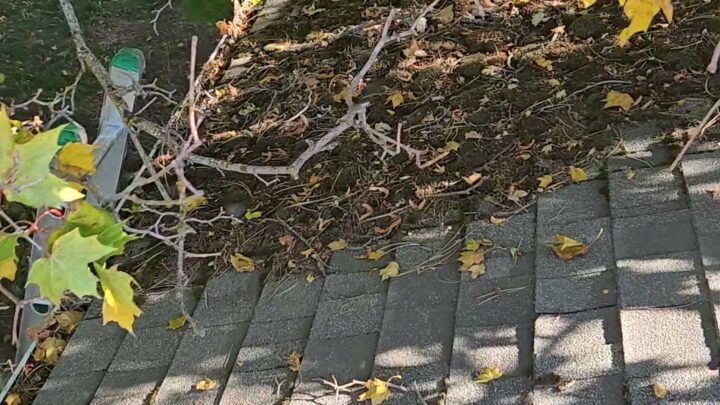
- Poor roof drainage or clogged gutters
- North-facing roof sections
- Asphalt or wood shingles (moss loves these more than metal)
- Debris buildup on the roof surface
- High humidity and frequent moisture
If your roof checks most of these boxes, moss is likely already there or will be soon.
Signs of Roof Moss Water Damage You Should Know
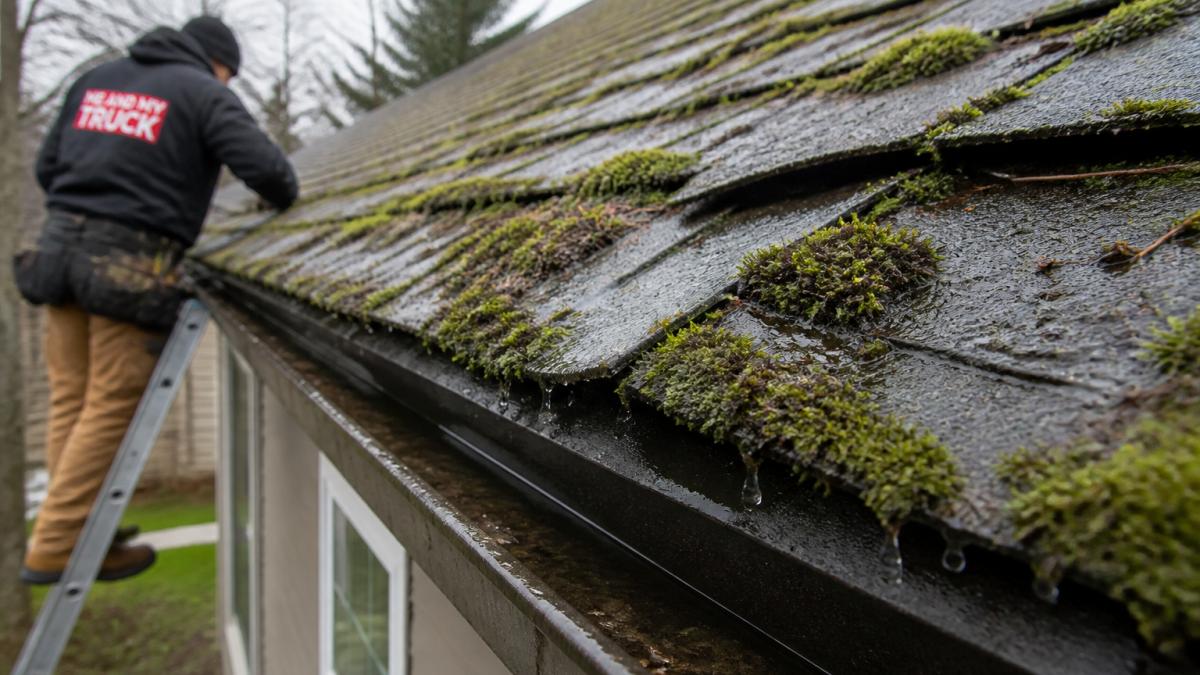
The first sign is visible moss, green or gray growth, especially on the north side or under tree branches. Early moss is thin and patchy. Heavy moss looks like a carpet.
Beyond the moss itself, watch for these warning signs:
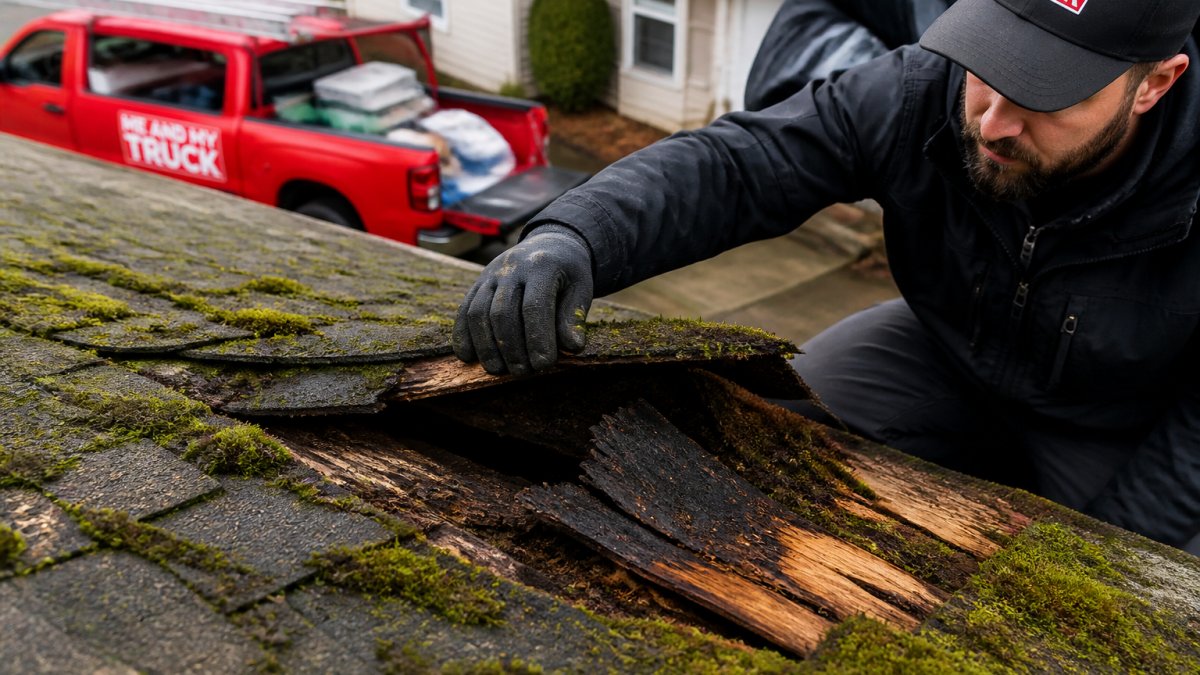
- Lifted shingle edges. Moss grows underneath shingles and pushes them up. You’ll see the edges curling or separating from the roof.
- Damp spots or staining. Dark patches where moisture sits longer than it should.
- Soft or spongy spots. If you walk on the roof and feel soft areas, moisture is trapped there.
- Gutter overflow or backup. Moss washes down into gutters and clogs them. Water backs up instead of draining.
- Water stains on interior ceilings or walls. This means water is finding its way inside.
These signs don’t all mean structural damage is happening. But they mean moisture is trapped, and that’s the pathway to damage.
The Real Damage Pathway: Moisture and Lifted Shingles
Here’s the honest version. Moss doesn’t rot wood or weaken rafters. Moss holds water, and water does the rest.
Step one: moss holds water against the roof surface. A thin patch is mostly cosmetic.
Step two: the shingle layer breaks down faster. What happens next depends on what your roof is made of.
- Asphalt shingles. The granules on top are the sacrificial layer. Constant dampness loosens them, and once granules wash away, the asphalt underneath gets brittle and curls. Moss also works its way under shingle edges and lifts them. Lifted edges are the real problem, because water now runs underneath instead of off.
- Wood shingles and shakes. These are the most moss-friendly surface there is, and the most vulnerable. Wood stays wet, wet wood grows moss, and moss keeps the wood wet. The shingles themselves soften and split over time. This is a slow process, not a sudden one.
- Tile and metal. Moss mostly sits on top and fills the seams and channels. The tile or metal itself usually shrugs it off. The risk here is different: moss and the debris it traps block the water channels, so water backs up and finds its way in sideways.
Step three: water gets under the roof covering. Once shingles are lifted or channels are blocked, water reaches the roof deck, the boards the shingles are nailed to.
Step four: prolonged wet decking and framing. Decking that never dries can soften and lose strength, and over time the framing below can be affected.
Timeline, honestly. One season of moss is a surface issue. Two or three seasons with lifted shingles and trapped moisture is when decking damage becomes plausible. It’s a slope, not a cliff.
What you can check from the ground
You don’t need to get on the roof to catch most of this. Grab binoculars and walk the yard.
- Green or gray mats on the north slope or under trees. Early moss is thin and patchy; heavy moss looks like carpet.
- Shingle edges that look curled or lifted. Look along the bottom edge of each course.
- Dark staining or streaks below the moss. Moisture sitting longer than it should.
- Granules collecting in the gutters. A little is normal; a lot means the shingles are shedding.
- Gutters overflowing in a normal rain. Moss washes down and clogs them, backing water up against the fascia and roof edge.
- Brown stains on ceilings or walls inside. Water is already finding a path in.
Urgency levels
- Watch. Thin, patchy moss, no lifted shingles, no interior stains. Treat it and keep an eye on it.
- Act this season. Thick moss, visible lifted edges, gutters clogging with moss and granules. Treat the moss and get a roofer to look at the shingles.
- Act now. Soft or spongy spots on the roof, interior water stains, or visible sagging. Stop and get a roofer out. Water getting inside does damage every day it sits there.
Moss is the messenger, not the wrecking ball. The damage, when it happens, comes from water that moss helped trap. Catch it at the “watch” stage and you’re dealing with a surface problem, not a structural one.
Roof Moss Treatment Options That Actually Work
You have two main approaches: spray treatment or powder treatment. Both work. The choice depends on your roof type and preference.
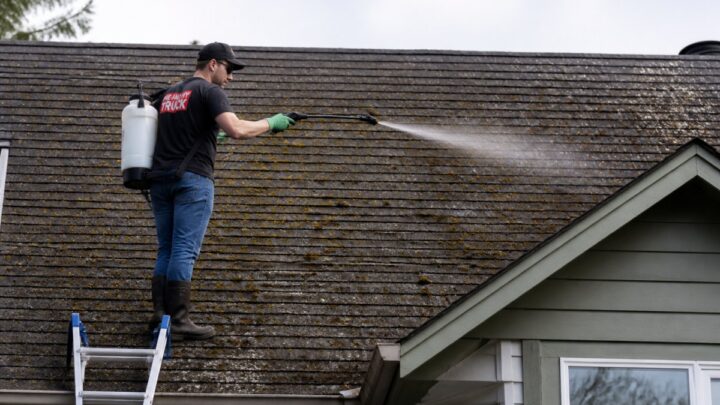
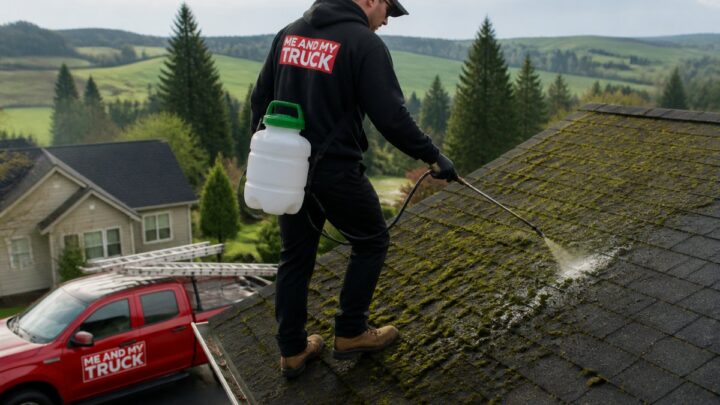
Spray treatment uses a pump sprayer to apply a liquid solution across the moss.
Powder or granular treatment is a dry product you scatter across the roof. It dissolves with rain and kills the moss gradually.
Both treatments kill the moss but don’t remove it immediately.
Here’s what doesn’t work well: pressure washing. High pressure damages shingles. It strips granules. It can force water under the shingles. Don’t do it.
If you treat the moss yourself, use a pump sprayer or powder product designed for roofs. Follow the instructions. Wear shoes with good grip.
If you’d rather have someone else handle it, Me And My Truck treats roof moss using pump sprayer or powder application.
How to Remove Moss From Your Roof Safely
If you’d rather handle it yourself, good for you. Here’s how to do it without wrecking your shingles or your weekend. Safety basics are up in the treatment section, this is the actual sequence.
Step 1: Look before you treat
Walk the roof carefully, or use binoculars from the ground. Note where the moss is thickest, and look for soft or spongy spots and lifted shingle edges. If you find soft spots, stop, that’s a roofer’s call, not a moss treatment call.
Step 2: Apply the treatment
Use a pump sprayer or a powder/granular product made for roofs. Follow the label for mixing and coverage. Spray or scatter across the mossy areas, even coverage, not puddles. Don’t oversaturate or stand in one spot soaking a patch.
Step 3: Let it work
The moss takes a few weeks to die and thin out. It’ll turn brown and start to lift, and rain helps wash the dead material away.
Step 4: Clear the dead moss gently
Once it’s dead and dry, a soft brush loosens it, and a light rinse with a garden hose moves it along. Never use a pressure washer on a roof. High pressure strips granules, forces water under the shingles, and turns a surface problem into a real one.
Step 5: Clear the gutters
Dead moss ends up in your gutters. Clean them out so water drains. Once or twice a year is right for almost every home on the Palouse. If you’d rather not get up there, Me And My Truck cleans gutters by hand and hauls the debris away.
Material-specific notes
- Asphalt shingles. Gentle spray or powder. Avoid brushing hard, lifted edges mean the shingles are already stressed.
- Wood shingles and shakes. Powder is usually kinder. Wood is soft, and aggressive brushing can splinter it.
- Tile and metal. Focus on the channels and seams where moss and debris collect. A soft brush works well. Don’t walk on tile if you’re not sure it can take the weight.
- Steep or tall roofs. If you’re not comfortable, don’t go up. That’s not a cop-out, it’s the right call.
What not to do
- Don’t pressure wash. Ever.
- Don’t scrub live moss. You’ll spread spores and damage shingles.
- Don’t use a rake or stiff-bristle broom on asphalt or wood.
- Don’t treat on a wet roof or when rain is coming in the next day or two.
If you’d rather not climb up there, Me And My Truck treats roof moss with a pump sprayer or powder application. Call or text (208) 882-5641 or send a photo for a free quote.
When to Call a Repair Company
You need a roofer if you find:
- Soft, spongy spots when you walk the roof
- Water stains inside your home on ceilings or walls
- Lifted shingles with visible gaps or separation
- Heavy moss that’s been there for years
- Signs the decking is damaged or rotting
We can point out these problems when we treat the moss. We can’t assess whether the structure is damaged. That’s a repair company’s expertise.
Don’t wait on this. If water is getting inside, it’s doing damage every day it sits there. Get a roofer to look at it.
Conclusion
Roof moss is a surface problem that creates moisture conditions, not roof moss structural damage. The moss itself doesn’t cause structural damage. But the moisture it traps can lead to damaged shingles, rotted decking, and water intrusion if you ignore it long enough.
The good news: moss is treatable. You can handle it yourself with spray or powder treatment, or we can treat it for you. Either way, catch it early and keep your roof dry.
If you see heavy moss, lifted shingles, or soft spots, have a roofer assess the decking. Early moss growth is straightforward to treat.
We treat roof moss on homes and businesses across the Palouse. If you’d rather not climb on the roof yourself, call or text (208) 882-5641 or send a photo for a free quote.
Frequently Asked Questions
Can roof moss cause structural damage to a home?
Moss itself doesn’t directly damage roof structure. The real risk is what moss creates: trapped moisture and debris that keep wood roofs wet longer. This can lead to lifted shingles and water intrusion over time, which is why addressing moss growth matters. However, moss is a roof-surface issue, not a foundation or framing threat. If you spot heavy moss, treat it to prevent moisture problems before they develop.
What are the signs of roof moss water damage?
Look for lifted or curled shingle edges, soft spots when you walk on the roof, visible water stains on interior ceilings or attic wood, and gutters clogged with debris from moss breakdown. Moss itself appears as green or black growth, usually on north-facing or shaded slopes. If you notice any of these, it’s time to address the moss and have someone inspect for water intrusion.
How do I remove moss from my roof safely?
If you’re comfortable on a roof, you can apply a moss-treatment product. Wear soft-soled shoes for good grip, work in dry conditions, and take your time. Never pressure wash a roof, it damages shingles. Me And My Truck can apply moss treatment using a pump sprayer or granular product. Call or text (208) 882-5641 or send a photo for a free quote.
How is roof moss treated?
Moss treatment typically involves applying a chemical spray or granular product that kills the moss and prevents regrowth. The moss dies and gradually washes away over weeks or months. Some treatments require a second application. Prevention includes keeping gutters clean and trimming tree branches that shade the roof. Me And My Truck handles moss treatment on Palouse homes, call (208) 882-5641 for details on what your roof needs.